What happened the night Jethro Tull beat Metallica to a Grammy Award

(via Classic Rock) by Johnny Black

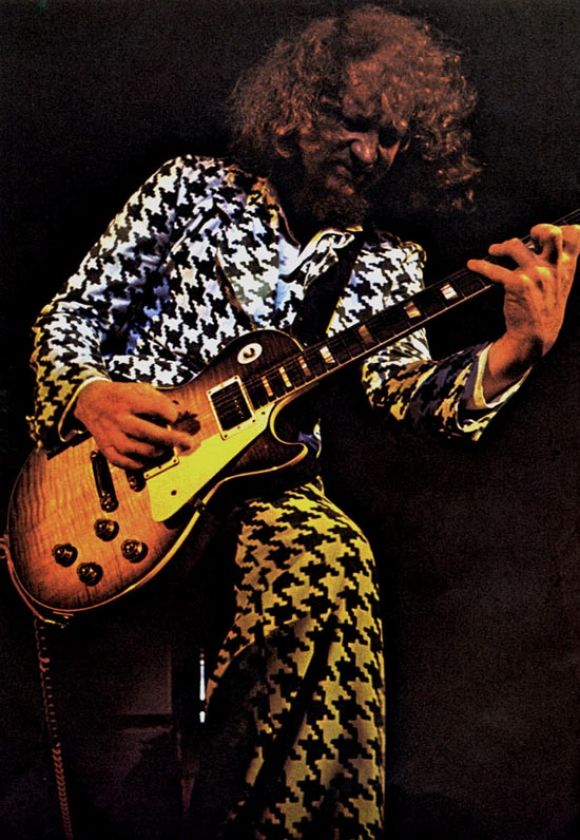
When prog rockers Jethro Tull pipped Metallica to win Best Hard Rock/Heavy Metal Recording award in 1989, most in the audience started laughing. Some of them haven’t stopped

n 1989, in an attempt to show they were at least attempting to be ‘down with the kids’, the Grammys introduced a new category: Best Hard Rock/Heavy Metal Recording. All good so far.

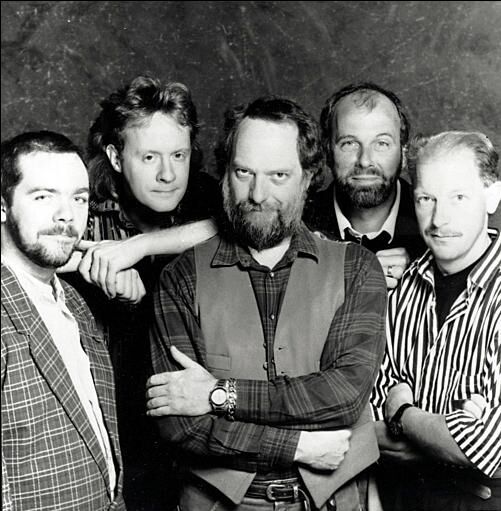
However, on February 22, when Metallica, Iggy Pop, Jane’s Addiction and the year’s other major contenders in the new category showed up for the Grammy Awards ceremony at The Shrine in Los Angeles, none of them could possibly have expected that, when award presenter Alice Cooper opened the envelope and began “And the winner is…” the award for Best Hard Rock/Heavy Metal Recording of 1989 would go to a folksy, flute- fronted prog rock band: the decidedly non-metal, far from hard-rocking Jethro Tull.

Yes, you can laugh. Many there on the night certainly did…

Read more: What happened the night Jethro Tull beat Metallica to a Grammy Award | Louder (loudersound.com)

On Music…

Radio Garden Offers a Fun Way to Explore Stations of the World

(via digitaltrends) by Trevor Mogg

Imagine looking at Google Earth and seeing thousands of tiny green dots all over the map, with each one representing a playable radio station. That’s pretty much Radio Garden, a mobile and web app offering a fun way to enjoy live radio from around the world…

Read more: Radio Garden Offers Fun Way to Explore Stations of the World | Digital Trends

Radio Garden – Search

The Best Steely Dan Songs, Ranked

(via uproxx) by Steven Hyden

One of the strangest (and most heartwarming) developments in recent years is the hip-ification of 1970s snarky jazz-rock institution Steely Dan. Once the butt of endless “graying ponytail” jokes by insufferable indie dweebs, Steely Dan has somehow become part of the indie dweeb canon, a turn confirmed by numerous indie music sites writing thoughtfully and enthusiastically about the band’s nine studio albums released over the course of 31 years.

Some have claimed that this embrace of The Dan is “revisionism,” but that’s not exactly right. In the ’70s, Steely Dan was widely regarded as one of the top American bands of the era. They were commercially successful and critically acclaimed. It’s just that subsequent generations for decades didn’t seek them out like they did Fleetwood Mac or even The Eagles. This was partly a function of how Steely Dan songs work — a spotless veneer of impeccable musicianship and complex music progressions act as a kind of slow release capsule for the humor and perversity that lurks inside. The whole point of this band is to grab the ear immediately, but not reveal what is actually going on until many listens, and even many decades, later. That’s not revisionism; that’s just taking a very long time to “get it.”

Read more: The Best Steely Dan Songs, Ranked (uproxx.com)

_____________________________________________________________________________________________

Editorial note: While I solidly disagree with many of the the author’s choices/placings (and don’t share his understanding of what the song “The Fez” refers to) I applaud an informative and thought-provoking article on one of my favorite bands.

A Picture’s Worth a Thousand Words: Stories Behind Iconic Album Covers

Source: Amazon / Photo by Dezo Hoffman, Shutterstock

(via musicoholics)

Rubber Soul, The Beatles (1965)

Photographer Robert Freeman snapped the picture of the band in John Lennon’s garden. The stretched effect was actually a mistake made while the band was looking at Robert’s samples. He projected the image onto a cardboard cutout, but when the cardboard fell backwards, the image became stretched. The band ended up loving the image and felt like it was a perfect depiction of their new sound.

The album’s typography was designed by Charles Front. He used the title as inspiration and created a typeface style that was used for psychedelic and flower-power designs. Charles also added another hidden element to his lettering. The title reads “Road Abbey” if you hold the album upside down in front of a mirror…

Read more: A Picture’s Worth a Thousand Words: Stories Behind Iconic Album Covers – page 3 of 36 – Musicoholics

Jethro Tull’s Ian Anderson: My Life in 10 Songs

As the pioneering prog rockers celebrate their 50th anniversary with a tour and new box set, their leader reflects on the tracks that defined them

(via Rolling Stone) by Kory Grow

For Ian Anderson – prog rocker extraordinaire and the world’s best one-legged-stance flautist, bar none – a half-century career in music is no remarkable feat. “It’s not any particularly novel or unusual occurrence,” the Jethro Tull leader says nonchalantly through his dry British accent. “This year marks the anniversary of many other bands who did things around the same period of time. King Crimson started in 1968. So did Yes, Rush and Deep Purple. And of course it’s Led Zeppelin’s 50th anniversary too. So there we go.”

But what he fails to acknowledge is that none of those bands, no matter how out-there they got, were able to blend their hard-rock aspirations with the same levels of pomp, guile or unapologetic pretension as Jethro Tull. None scored FM-radio gold singing lyrics like “Lend me your ear while I call you a fool” (“The Witch’s Promise”) or by writing a 44-minute, tongue-in-cheek prog-rock song (“Thick as a Brick,” presented in two parts on the original LP and packaged in a fake newspaper) or by playing frilly flute solos over Renaissance-inspired folk-rock (“Songs From the Wood”).

In their 50 years, Jethro Tull have notched an astounding 15 gold or platinum albums in the U.S., as well as two Number One LPs. Their most famous song, “Aqualung,” has a guitar riff that’s as cutting and memorable as “Iron Man” and “Smoke on the Water,” and their music has influenced Black Sabbath, Iron Maiden, Porcupine Tree, Pearl Jam and Nick Cave, among others. Yet the band has not yet been inducted into the Rock and Roll Hall of Fame, and the only time it has won a Grammy was in the Hard Rock/Metal category – a concept that seemed so preposterous to Anderson that he didn’t bother to show up…

Read more: Jethro Tull’s Ian Anderson: My Life in 10 Songs – Rolling Stone

Previous Older Entries Next Newer Entries