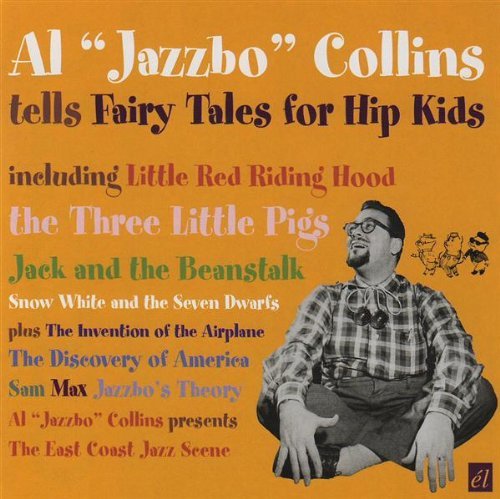
Al “Jazzbo” Collins: Tells Fairy Tales for Hip Kids (1952-1953/2008)
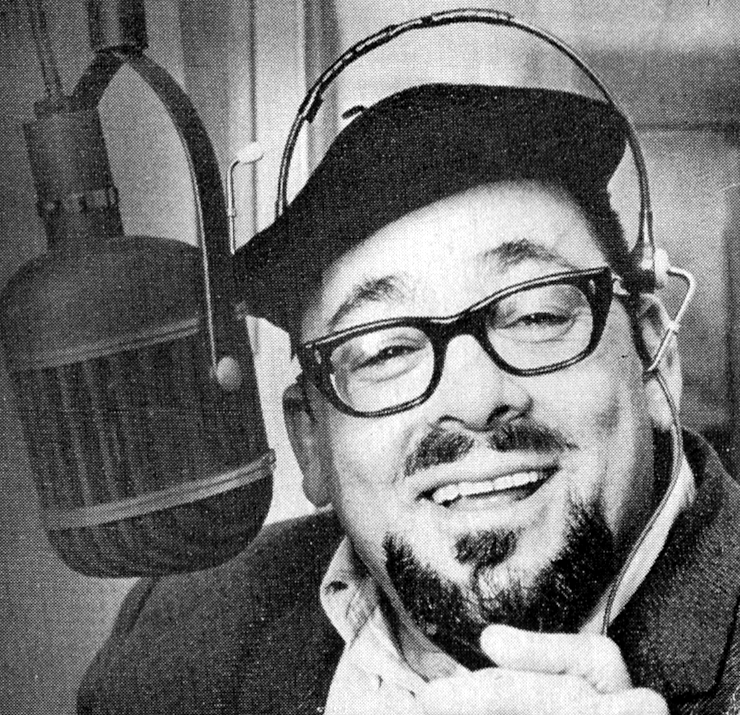
Al “Jazzbo” Collins, who was also known as “Jazzbeaux”, was a long time radio disc jockey who worked in Logan, West Virginia, Pittsburgh, Chicago, Salt Lake City and New York.
He appeared with Steve Allen on the Tonight Show and even took his place when Allen left the show, briefly bridging the gap between the eras of Allen and Jack Paar.
From 1952-54 or so he recorded a series of “bop-talk” records for Brunswick that were gathered into a CD compilation in 2008.
He also appeared as himself on NBC’s radio science fiction series X Minus One in 1957.
Jazzbo’s hipsterspeak tale telling is still a hoot.
Lily Allen returns after a seven-year musical hiatus with an emotionally direct–even blunt–breakup record.
In fact it’s so emotionally direct that we’ll make the editorial choice here of sparing you the more bruising (perhaps cringe-inducing) portions of the story, which details the demise of her relationship with American actor David Harbour.
The “palace” she refers to in multiple songs is a fairly accurate description of the house she and Harbour offered a tour of for Architectural Digest.
As a songwriter, Allen is gifted with an arch sense of humor that can mold even the emotional distress of a breakup into worthwhile entertainment, as she’s done on the highlights we include.
The parts of the album one imagines were difficult to write would also be difficult to listen to repeatedly, the pain being almost too real at times. But the musical hooks make the songs irresistible nonetheless.
Listening to the cheekily-titled highlight “4Chan Stan” is like walking in on a marital spat. Allen isn’t one to dress up pain in cliche, generality or indirect reference. The unflinching detail makes it real, immediate. It’s great songwriting, provided you have the stomach for it.
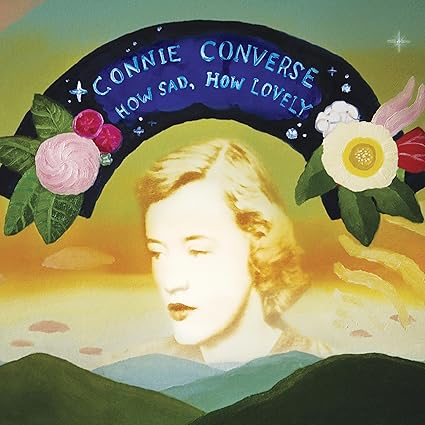
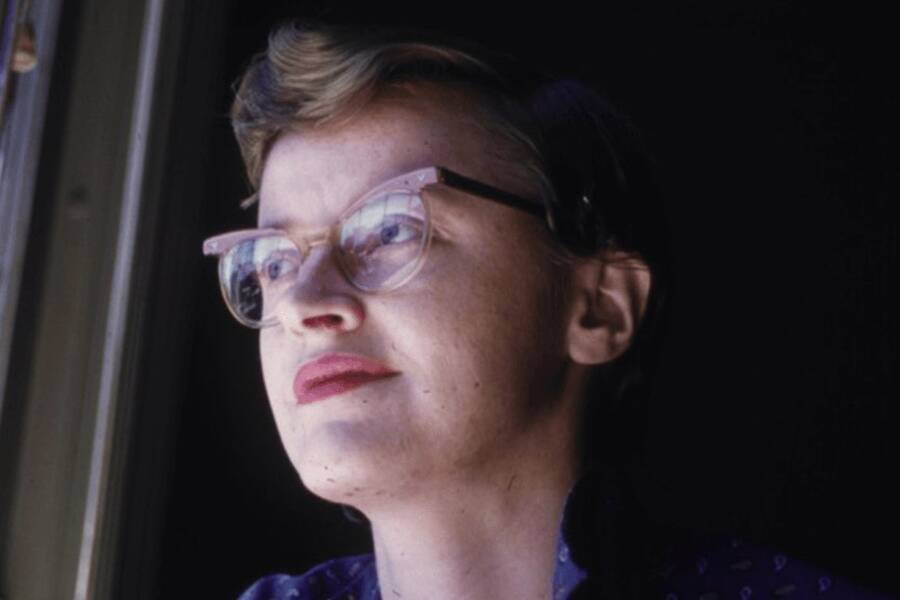
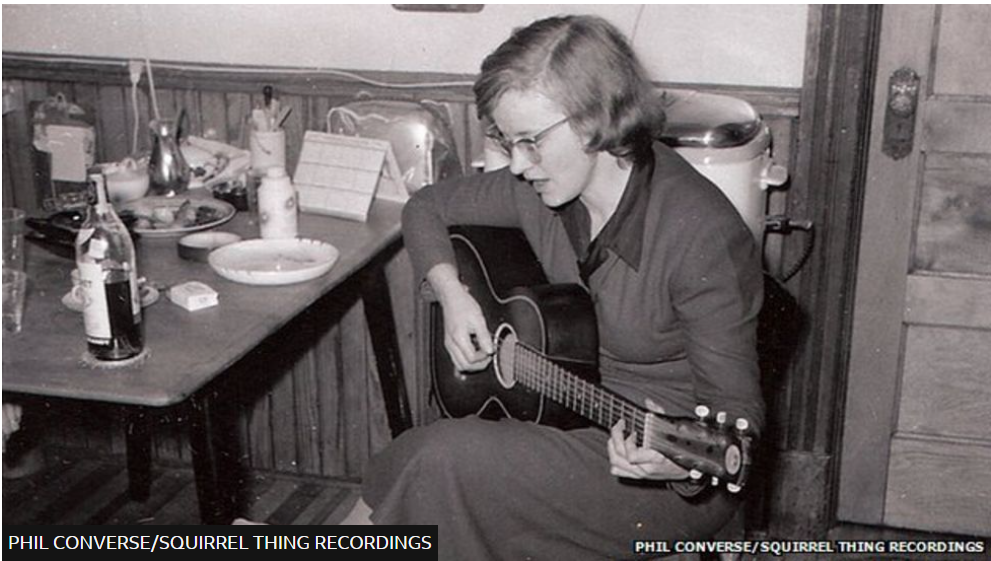
Connie Converse disappeared in 1974, leaving behind a haunting body of recorded music that would remain virtually unheard for the next 35 years.
Written through the 1950’s, Connie’s cache of original material instantly reveals itself to be uniquely inspired and years ahead of its time. (From Bandcamp artist bio)
Sure, the sheer mysteriousness of the Connie Converse’s story (explained in the video at page bottom) would be enough to intrigue: a brilliant student who dropped out of college, an enigmatic figure who seemingly dropped out of existence without a trace, a cache of songs forgotten and rediscovered 50 years later…a fascinating tale.
But this isn’t an unsolved mysteries blog, and we’d be content to leave the tale to other sites, but for one thing: Connie Converse’s songs are terrific.
The quality of the homemade recordings, not so much.
As Gene Deitch, who helped her record the tunes that would be discovered half a century later, surmised: “There were many better singers than Connie, but few were as intelligent or literate or beautiful. Her songs still haunt me.”
Indeed, as a writer Converse had a unique voice, a delightful way with wit, and a gift for the turn of phrase that would be the envy of many a folksinger.
Songs like “Roving Woman” and “Clover Saloon” also showed a feminist lyrical bent that was decades ahead of its time.
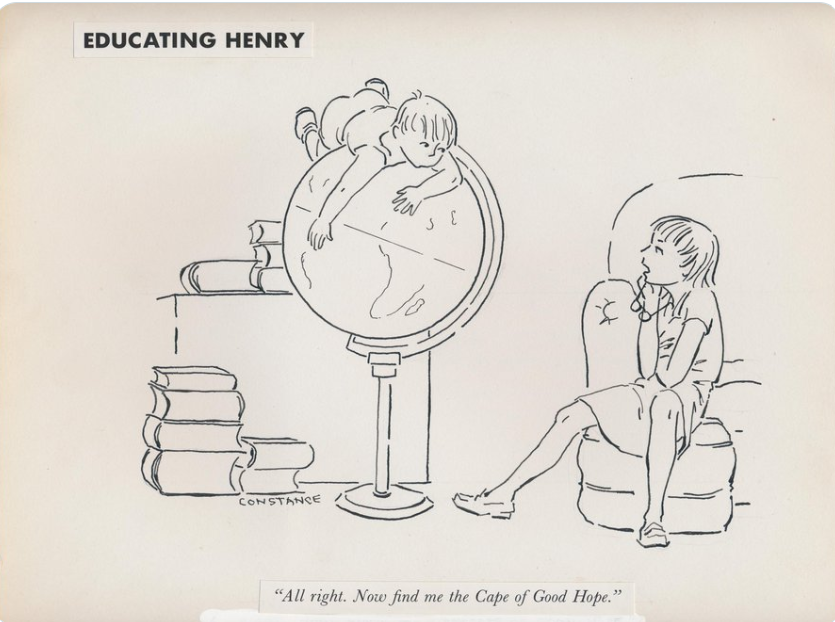
Moving to an apartment at 23 Grove Street in New York’s Greenwich Village area, Converse found work writing for academic journals and had cartoons published in the Saturday Review of Literature. She also enjoyed painting and writing poetry.
But it’s the songs she wrote and recorded at the Grove Street apartment, and at Deitch’s home, that will be her most lasting legacy.
Sadly however, it’s a legacy Connie Converse would not be around to enjoy. She gave up on the pursuit of music as a career, and moved from Greenwich Village the same year Bob Dylan arrived there, 1961.
23 Grove Street
Then in 1974, after health issues and bouts of depression, Connie Converse drove off in a Volkswagen Beetle, leaving behind written notes for family members and friends, including:
“Human society fascinates me and awes me and fills me with grief and joy. I just can’t find my place to plug into it. So let me go, please; and please accept my thanks for those happy times that each of you has given me over the years: and please know that I would have preferred to give you more than I ever did or could—I am in everyone’s debt.”
and:
“Let me go, let me be if I can, let me not be if I can’t”
Connie Converse was never heard from again, except in the rough and real recordings collected and finally released in 2009.
How sad, how lovely.
Listen to: “Talkin’ Like You (Two Tall Mountains)”
Natalia Lafourcade: Un Canto por México, Vol. 1 (2020)
This album’s story begins with the September 2017 Puebla earthquake, which in addition to causing destruction in Puebla, Morelos and the greater Mexico City area, also did damage to the Son Jarocho Documentation Center, a cultural building in Veracruz.
Singer-songwriter Natalia Lafourcade organized a November 2019 fundraiser concert, a sold-out 3-hour affair dubbed Un canto por México (A Song for Mexico) to aid in the center’s reconstruction.
The concert and her experience with the local community and the Veracruz musical style of folk music known as Son jarocho inspired the release of two albums, of which this is the first.
Musical guests include Los Cojolites, Jorge Drexler, Los Autenticos Decadentes, Carlos Rivera, Leonel García, Panteon Rococó, Emmanuel Del Real of the band Café Tacvba and the youth mariachi of Tecalitlán.
The album includes updated versions of previously released Lafourcade songs, Mexican traditionals, and a couple newly-written originals.
Among the new songs is “Mi Religión”, which won the Latin Grammy for Best Regional Mexican Song. It’s addictive chorus:
Music, you My religion A lifetime isn’t enough To give you my love
Music, you My downfall A lifetime isn’t enough To give you my love
The song is just one example of Natalia’s superior knack for lyrical phrasing. The consonants fall like a percussion instrument playing a polyrhythm.
Interpolating as it does traditional Mexican folk rhythms into its musical fabric and celebrating with joyful exuberance the love of the music itself, it’s the kind of song that puts Natalia Lafourcade in rarified company as an ambassador of Mexican song.
Un Canto por México, Vol. 1 won 2 other Latin Grammys in 2020, including Album of the Year. It cemented her status as an artist devoted to Mexico’s musical tradition, her love of which is on display again in another Lafourcade original, “Mi Tierra Veracruzana”:
See you again See you again My Veracruz land, I want to see you See you again See you again My Veracruz land, I want to love you
Lafourcade writes songs that will endure, because they sound already like longstanding Mexican traditional folk songs.
The below video of “Tú Sí Sabes Quererme” from Un Canto por México, Vol. 2 best conveys the spirit of the Un canto por México project:
After kicking around in bands most Americans haven’t heard of (like Razorlight, We Are Scientists, and I Am Arrows) British drummer/songwriter/multi-instrumentalist Andy Burrows offered up his second album as a solo artist, on which he played all instruments.
Company is a beautifully ruminative record but confounding in that none of its four singles charted.
Then again, none of the wonderful songs we include here were among the singles, which is equally confounding.
Nevertheless, guys like Andy Burrows actually get played on UK pop radio. He’d probably never get played on American pop radio.
Yes, we won the Revolutionary War–but at what cost?
Nick Lowe is the type of artist to whom critics like to attach descriptors like “legendary”, but in appraising his discography they’ll frequently use phrases like “released to little success” and “largely went unnoticed”.
His biggest album in America was 1979’s Labour of Lust, mainly on the strength of the single “Cruel to be Kind”, his only US top 40 hit.
But 1979 was the year of The Knack, when New Wave music was breaking. By 1984 Lowe had wisely stopped looking for the follow-up hit that would never come and turned to a rootsier sound.
“Half a Boy and Half a Man”, with its roller rink Farfisa organ arrangement, sounds like Sir Douglas Quintet-brand Tex Mex.
“Live Fast, Love Hard, Die Young” is a Faaron Young cover.
“L.A.F.S.” is co-produced by Elvis Costello, whose first five albums had been produced by Lowe, and features the same TKO horns that graced Costello’s Punch the Clock of the same year.
The album as a whole is an exuberant affair, and garnered positive reviews from critics.
And fate has a way sometimes of rewarding persistent effort. Curtis Stigers’ recording of Lowe’s “(What’s So Funny ‘Bout) Peace, Love and Understanding” appeared on the biggest-selling soundtrack in history, the My Bodyguard soundtrack, and the million dollars he made in songwriting royalties probably made Lowe’s previous sales figures a little easier to live with.