Sometimes the spell of enchantment cast by a band’s music belies the tumult of the creative process.
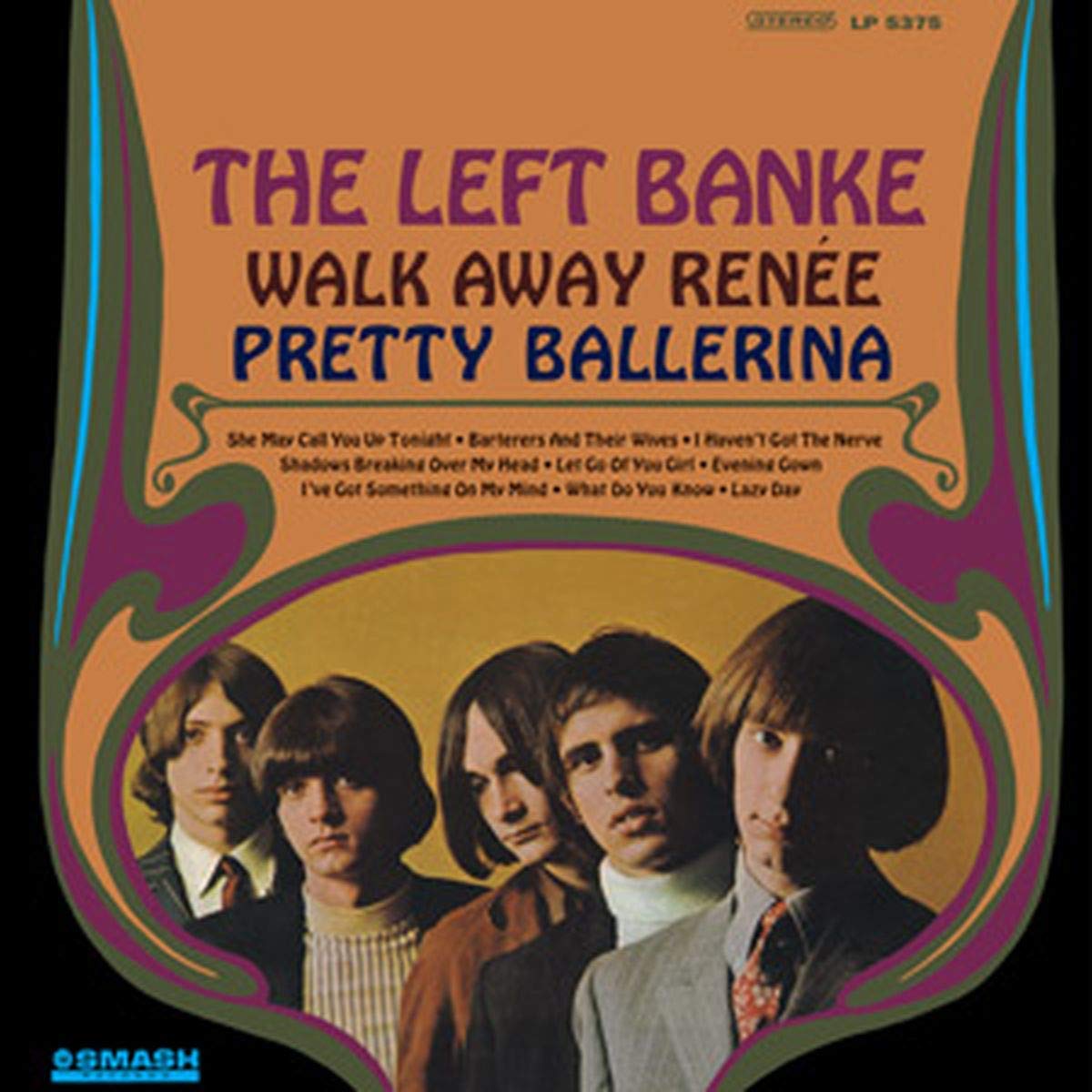
The Left Banke, led by 17-year-old songwriter/pianist/whiz kid Michael Brown and his father, producer/arranger Harry Lookofsky, pioneered so-called baroque pop with a pair of gorgeous mid-60’s hits–“Walk Away Renee” and “Pretty Ballerina”–inlaid with the sounds of harpsichord, woodwinds, and a small string section.
The music was as innovative as it was sublime.
But the band’s short lifespan is testament to the fact that all was not harmonious in the studio.
Brown left during the recording of their second album, frustrated by the challenges of reproducing their complex sound live with young and inexperienced bandmates.
And his bandmates were frustrated with Brown, who wasn’t the easiest guy to get along with.
But like other bands who produced enduring and seminal work, the Left Banke had an extended afterlife, including short-lived reunions, one-off singles and even commercial jingles.
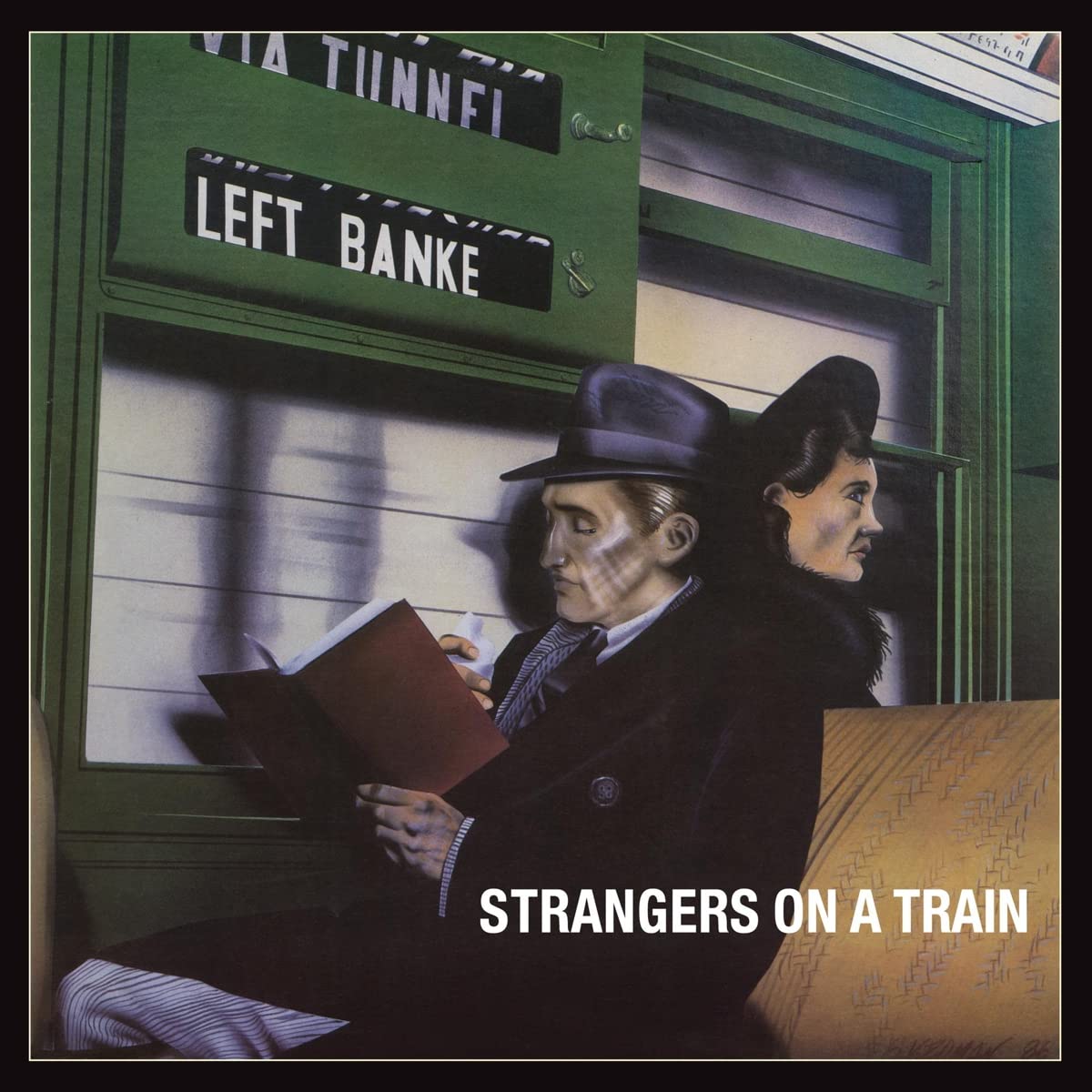
Strangers On a Train (titled Voices Calling in Britain) was recorded sans Brown by the remaining trio of vocalist Steve Martin-Caro, drummer George Cameron and bassist Tim Finn. The recordings are from 1978, though the album didn’t see release until ten years later.
Finn had signed a publishing deal with Camex music and recruited his former bandmates to fill out his demos at the suggestion of the company, who encouraged him to turn it into a Left Banke project.
It’s notable that Finn never considered the recordings to be “finished” even when released in ’86 under the Left Banke name.
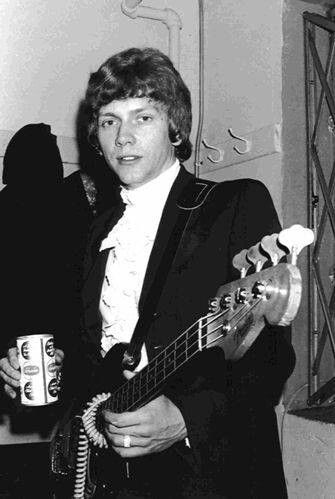
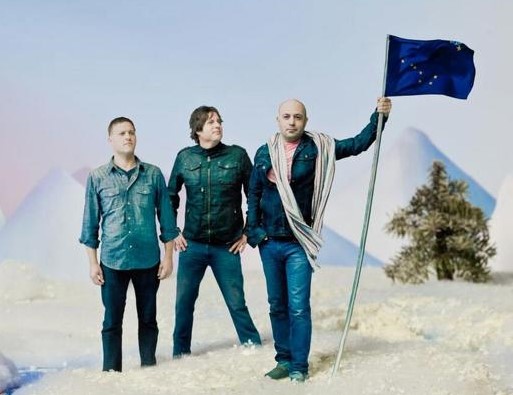
George Cameron, Steve Martin-Caro, Tom Finn
That said, Strangers On a Train is worth hearing for fans of Badfinger, Big Star and even the Raspberries.
“Hold On Tight” could be an Eric Carmen power pop rave-up from ’72.
“And One Day” is a delicate, heart-tugging ballad of lost love featuring Martin-Caro’s McCartney-esque delivery.
And “Only My Opinion” lands squarely in Badfinger/Big Star territory, with tasty guitar fills and plaintive vocals.
The 2022 re-release of the album includes 6 additional tracks–Michael Brown demos recorded with Steve Martin-Caro on vocals–offering a tantalizing glimpse at what might have been had the band reunited one last time.
A moot point since Steve Martin-Caro and Tom Finn died in 2020, following George Cameron’s passing in 2018 and Michael Brown’s in 2015.
But the 1978 recordings–despite Michael Brown’s absence and the fact that the band had moved on from its trademark 60’s baroque pop adornments–sounds like a lost piece of the 70’s pop rock story.
If you miss that sound and have worn out your too-small collection of Badfinger and Big Star records, here’s some new old music for you.
While not exactly a household name this side of the Atlantic, Lindisfarne and their fine 1970 debut LP should be on the radar of any fan of folk-influenced rock of the era.
The Newcastle group’s sound evoked The Band at times, but with decidedly English leanings. Or a looser version of early Fairport perhaps. And nicely in tune with the acid folk vibe in late-60’s/early 70’s Britain.
This album peaked at #8 in the UK charts a year after its release, having gotten a jolt when their second album Fog On the Tyne topped the charts in 1971.
But while Tyne was their breakthrough, Nicely Out of Tune is their strongest album.
The pretty, atmospheric “Lady Eleanor” kicks off the album. The song features mandolin accents by Ray Jackson, who also played the instrument on Rod Stewart’s “Maggie May”. The songs ends nicely with a mandolin-and-bass coda.
The simple, haunting beauty of “Winter Song” repays careful attention to the lyrics, while “Turn a Deaf Ear” displays the band’s harmonies and shanty-esque pub singalong side.
“Alan in the River With Flowers” is another pensive ballad reminiscent of David Cousins’ early Strawbs writing. Its title parodies “Lucy in the Sky With Diamonds”.
And “Down” is a jaunty tune with instrumental credit to multi-instrumentalist Ray Jackson for playing “flatulette”, which actually consisted of blowing raspberries.
Like Camel, Amazing Blondel, Fairport Convention and so many other fine English bands of the era, lineup changes took a toll just a few albums into Lindisfarne’s run.
But while the subtle brilliance of Nicely Out of Tune will be lost on many, if you’re among those with an ear for nicely-rendered 70’s British folk rock, this album is–as they like to say across the pond–just the job.
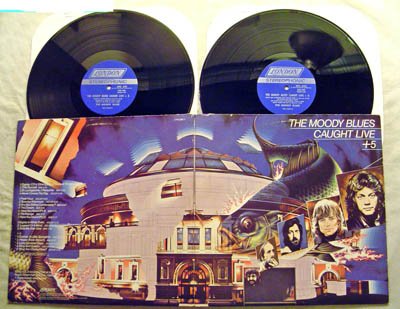
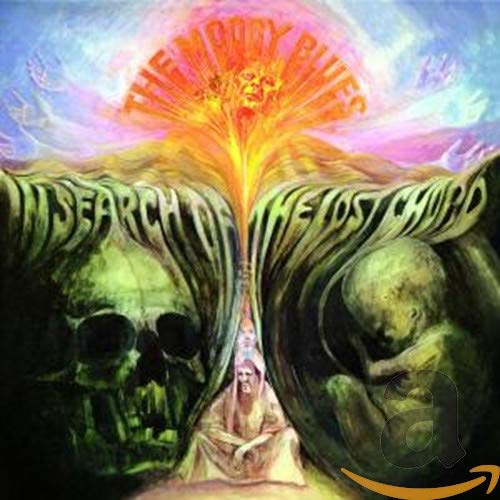
On this strange hybrid release, issued shortly before the Moody Blues reunited for their 1978 Octave album, 14 of the 19 tracks are from a December 1969 show at London’s Royal Albert Hall. The remaining five were previously unreleased studio recordings from 1967 and ’68.
The late-60’s Moodies simply couldn’t duplicate their complex, layered studio recordings in a live setting, Justin Hayward couldn’t play an acoustic guitar and electric at the same time. Later-era live releases such as A Night at Red Rocks more successfully did justiceto the band’s symphonic sound.
But this 1969 show, recorded on a night when the band has admitted they were uh, high, is not exactly their crowning achievement.
What we’re concerned with here is the +5, the primary reason for a fan of the classic-era band to welcome this album, as I did in 1977.
The newly-reunited Moodies were about to embark on a new phase, in which Mellotron maestro Mike Pinder would only stick around long enough to record the Octave album. This new era would see the band’s sound “updated” first with ill-fitting saxophone, then later with the synthetic sounds of keyboardist Patrick Moraz bleeping, whirring and whizzing all over the next couple decades of Moody Blues music.
What contemporized their music and made it 80’s radio friendly–I mean it’s hard to argue with a number 1 album–seems like artistic desecration in retrospect. The Moody Blues aren’t supposed to sound current. At their best, they sounded like a band removed from time. Timeless.
A band that recorded with flute, harpsichord, cello, harp and, oh yeah a full orchestra wasn’t exactly trying to sound contemporary in the late 60’s.
At any rate, a year before before Octave–before the band made their artistic deal with the devil and began to slip into the slide zone–we got one last taste of the sound that defined them at their peak, by way of the belatedly-released “+5”.
Though there’s no “Nights in White Satin” among the studio tracks, all five songs (one each by Pinder and bassist John Lodge and three by Justin Hayward) are keepers. In fact, if the “+5” were “+10” it would make for an album worthy even of this band’s artistic peak.
Poppy and relatively succinct (none exceeds four minutes) most of these songs feature Lodge’s arcing falsetto crowning the layered vocal harmonies, drummer Graeme Edge adding the thunder of ominous timpani or stashing interesting fills into corners, Justin Hayward’s signature lead vocals and of course Mike Pinder’s mellotron, which more than any other single element gave classic Moody Blues music that mystical fairytale atmosphere.
If you liked “Voices in the Sky” from In Search of the Lost Chord, you’ll like “Gimme a Little Somethin'”, which combines Justin Hayward’s plaintive lead vocal, tasty Ray Thomas flute, Graeme Edge’s propulsive percussion, all underpinned by Mike Pindar’s mellotron, and ornamented by the aforementioned falsetto by Lodge, whose inventive bass playing is here, as always, the most overlooked aspect of this band’s sublime mix.
Pinder’s “Please Think About It” harkens to the band’s Denny Laine-fronted “Go Now” period–before Hayward and Lodge came on board–with Pinder playing a bluesy piano rather than mellotron.
But with Lodge again painting the ceiling with ethereal high notes above angelic harmonies, a trademark of the post-Laine period, the song bridges eras.
Hayward’s “Long Summer Days” sounds like it could have been a radio hit in 1967 and indeed was intended for single release that year. It actually predates the band’s landmark Days of Future Passed LP and is one of the first songs recorded with the band’s two “new” members, Hayward and Lodge.
“King and Queen” and “What Am I Doing Here” both date from 1968, and their lack of inclusion on the band’s In Search of the Lost Chord album illustrates just how many great songs Justin Hayward was churning out at the time.
Perhaps they were deemed not to fit the concept of the album, and it’s hard to argue with the choices of “Voices in the Sky”, “Visions of Paradise” and “The Actor”, the three Hayward songs that album did feature. Still, this pair of ’68 outtakes are both superb songs.
Lodge’s bass playing on “King and Queen” is inspired. The song is structured like Hayward’s great “Never Comes the Day”, beginning quietly and building in intensity as it progresses to a rousing chorus.
“What Am I Doing Here” inspires visions of Tolkien fantasy and indeed there are fan-made videos for this song on YouTube that connect the worlds of LOTR and the Moodies quite poignantly. Again Hayward’s wistful, melancholy lead vocal in the verses is complemented by Lodge’s eerie falsetto in the chorus.
This is the spellbinding sound of the Moody Blues on top of their creative, progressive game. Their brand of prog wasn’t about tricky time signatures, 16-minute songs, or even instrumental prowess. It was all about atmosphere and sonic beauty.
The five studio recordings from Caught Live +5 are not near the top of any Moody Blues streaming playlist. Released as they were, a decade late and tacked onto a live album, they were fated to be overlooked even by hardcore fans.
Then again, if you’re new to the band’s classic period, or looking for a deeper dive, these songs aren’t a bad place to start.
Random trivia: The 8-track tape version of Caught Live +5 was one of the few albums released on that format which maintained the exact playing order of the vinyl record, with no song breaks.
Singer/songwriter Daniel Tashian’s Silver Seas create the kind of soft rock that belies the denigratory trappings of the tag.
From the heartsick melancholy of the title track, to the lush bossa nova lilt of “A Night On the Town”, to the perky pop of “Karaoke Star”. Tashian’s excellent vocals and stellar songwriting are the through line of a fine, overlooked LP.
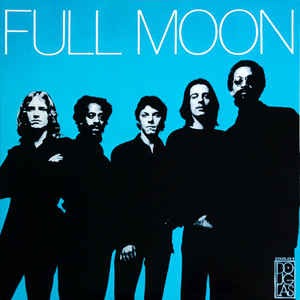
This semi-legendary 1972 album featured Paul Butterfield Blues Band alumni in an early example of the Jazz-Rock fusion that would find greater visibility later in the decade as bands like Weather Report and the Crusaders would release their most successful albums and Steely Dan would create session star-studded records like Katy Lied and Aja.
Full Moon was an album that never garnered mainstream exposure but was influential among musicians, who shared it among themselves.
The musicianship is excellent, the feel is loose, the solos are tasty, and the styles vary from song to song. The rocking opening track “The Heavy Scuffle’s On” evokes Rare Earth, while “To Know”, which follows it, is a gorgeous Tower of Power-like R&B ballad. And so on, each track leaning a bit more toward jazz, or gospel or Miles Davis fusion.
This is one of those albums that hit the cutout bins unjustly. Now is your second chance (or more likely your first) to check out this obscure gem.
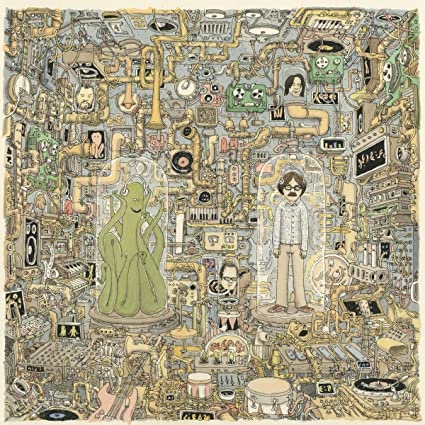
Weezer’s 14th studio album OK Human is a baroque pop musical departure, recorded entirely on analogue equipment and backed by a 38-piece orchestra. It will almost certainly be among their lowest-charting albums. Oh, and it’s wonderful.
That’s not to say it’ll satisfy the segment of the band’s fans who hanker for the wall of shred of the band’s earlier work. Their upcoming Van Weezer album, scheduled for release just four months after OK Human, ought to meet their noise quota.
But that’s not the point of this album. OK Human is meant to link violin strings to heartstrings. The orchestral setting provides the perfect melodramatic foil for Rivers Cuomo’s endearingly dorkish songwriting voice, so full of misanthropic melancholy. It’s a mix that evokes Ben Folds’ finest moments.
When Sting makes literary references, he comes off a bit up his own arse. When Cuomo does so a winsome humor slips through. Particularly in “Grapes of Wrath” where such references drive home the song’s point.
Cuomo eschews rock machismo cliche, prefering to name check Mrs. Dalloway, Winston Smith and Frodo Baggins. Because he just don’t care, he just don’t care. And anyway “battling Big Brother feels more meaningful than binging zombie hordes.”
Indeed.
Dorkitude aside, it’s the massive pop hooks that have been Cuomo’s calling card ever since “Buddy Holly” in ’94. And on OK Human he delivers the goods again. Critics will talk about guitars vs orchestras, and opine as to whether the lyrics are cheeky, sincere or just corny. But few will take note of the fact that Rivers Cuomo is possibly the best melodist in the world of pop rock.






 Every Moment Has A Song