"There's a time in life for Hoagy Carmichael. There's a time in life for Claude Debussy. There's a time in life for Jerry Lee Lewis. There's a time in life for Destiny's Child. All these things have their moment." ~Elvis Costello
Ex-Walkmen singer-songwriter Walter Martin’s We’re All Young Together isn’t necessarily a children’s album per se–more a record inspired by his becoming a father. But its songs can be appreciated by any very young child–or anyone whose inner child is still alive and well.
“Sing 2 Me” is a duet with the Yeah Yeah Yeah’s Karen O whose lyric typifies the playful tone of the album, marrying it with the fragile, magical twee of acts like the Weepies.
Originally released on the Lightbulb Sun album in 2000, the single version of “Shesmovedon” actually reached #4 on New Music Express‘ Independent chart across the pond that year.
The band later re-recorded the song during the sessions for 2005’s Deadwing LP and it is included as an unlisted bonus track on the American version of that record.
It’s this slightly punchier, guitars-to-the-fore version we present here, and it’s one more example (of the many throughout this blog) of Steven Wilson’s songwriting and production prowess.
A poignant reflection on the end of life. As I wrote elsewhere in this blog: This is the kind of song most rock bands wouldn’t touch; it takes balls, frankly, to sing about the surrender of earthly cares and the forgiveness of sins within the rock arena. This is the kind of song that makes Asia’s John Payne era matter. With none of the Wetton-Downes power harmony bluster Asia is known for, “Ready to Go Home” might actually be the boldest artistic statement in their catalog.
Co-written by Andrew (“Thank You for Being a Friend”) Gold and 10cc alum Graham Gouldman.
On the street below these walls Where I used to walk Now I can barely crawl All this darkness rising tall Lord, shine a light for me I’m waiting to be called
I’m ready to go home I’m ready to receive Forgiveness for my sins I’m ready to begin
Take this river to the sea Where the delta flows The tide is washing over me Guide this soul to heaven’s door Show me where tomorrow lies I’m waiting to be born
I’m ready to lay down I’m ready now to sleep A promise I must keep I’m ready to go home
Sometimes I lay down with these memories Breathe shallow deep inside of me When time has run its course with me And I’m ready to go home
When the evening shadows fall When the time has come I’ll let defenses fall To surrender’s to survive I will give up everything To those I leave behind
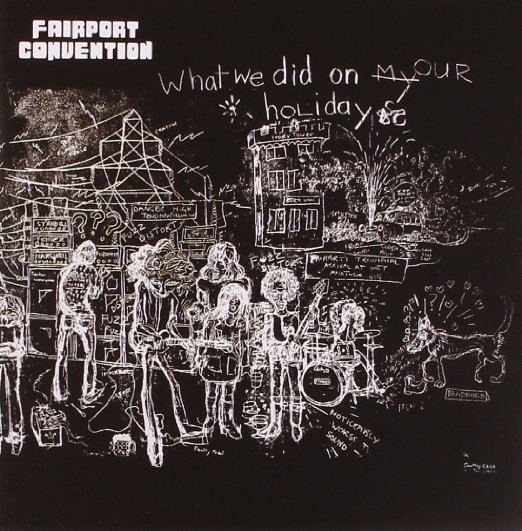
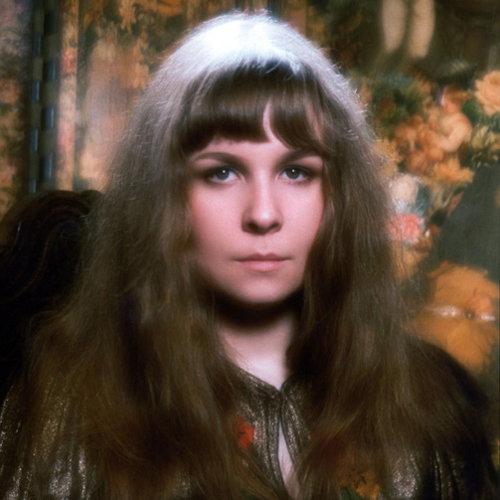
Fairport Convention’s second album, What We Did on Our Holidays, was Sandy Denny’s debut with the band. What she brought in the way of ethereal vocals and songwriting capability (she wrote “Fotheringay”) made an already formidable lineup even stronger.
That’s guitar legend Richard Thompson, still a teenager when this was recorded, providing the fluid, folky and atmospheric acoustic guitar. So much was ahead for Thompson, who showed a necessary restraint within the confines of mostly three-minute songs at this stage of Fairport’s existence. He soon left the band to record as a solo act (which he still does today) and to make a series of well-regarded albums with (now ex) wife Linda Thompson. His own material provides a format more conducive to his cutting loose with jaw-dropping solos.
Richard was fortunate enough to have recorded with the two women regarded as the best British female folk singers of all time in Sandy Denny and Linda Thompson.
As for Denny, she left Fairport a few years later as well, forming a new folk band whose name was shared with this song, Fotheringay. Her life was cut tragically short in 1978 when, having fallen down a staircase and hit her head on concrete, she died of a trauma-related brain hemorrhage a few weeks later.
John Ford: “All the Songs I Never Heard You Sing” (2000)
Sometimes you can like a song without the lyrics making complete sense to you. You keep it around for its melodic or atmospheric appeal until one day…boom! Events in your life align to the song and it becomes yours.
It’s a happy event when the song itself is a happy one. But more often, I think, it’s the sad songs that can ambush you in this way.
Tonight for the first time, every line of this song made sense to me. It went from merely poignant to potent. And I’ll listen to it again and again…and I’ll never wash away my misery.
The Chapin Sisters evoke the gilded harmonies of the Roches on this version of the early Madonna hit, uncovering an emotional cache the dance version didn’t quite reveal.