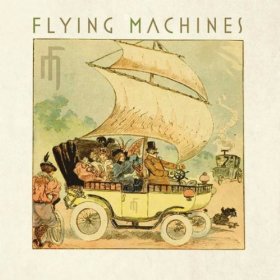
One might hear echoes of melodramatic symphonic pop of yesteryear in the sound of New York’s Flying Machines. I don’t throw out Freddie Mercury comparisons lightly, but there may be basis for it here.
“Stay” is from their consistently melodic and enjoyable debut.
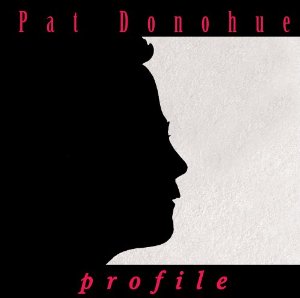
Pat Donohue is not only a master of acoustic fingerstyle guitar, but his songwriting is pretty spectacular too. The winning “Jazz Name” throws a witty series of internal rhyme rabbit punches at you until you surrender with a smile.
From the band that currently have me held firmly in the clutches of heavy–no, damn near continuous–rotation. This particular song has the tightest grip of all.
Moon Safari represents an astounding juxtaposition of seemingly incompatible musical components: the surprise-around-every-corner complexity of prog rock alongside an almost boy-bandesque propensity for catchy pop hooks, and a five-part harmony vocal sound simply unmatched in their genre.
At its absolute best prog rock is a triumph of possibility over musical triteness and cliché. It stretches the envelope. But it doesn’t need to tear the seams–to sound so “original” that it challenges more than pleases.
And that’s what Moon Safari seem to understand: ultimately music–even relatively complex music–is meant to be enjoyed. Melodic and instrumental hooks abound here. But like the best prog, it’ll take you many repeated listens to assimilate the song entirely–to be able to sing every lyric on cue and hit every correct note of the solo on air guitar or synth.
And long before you do–assuming you have a musical sweet tooth for the sunny, uplifting sounds typical of Swedish prog–you’ll be blaring it from a car window or hitting the repeat button on your device to enjoy another rapturous six-minute fix.
Ornate, yet entirely accessible. A treat for fans of complex music, but a great bridge into the genre for fans of more mainstream bands (Styx come to mind). This might be the perfect prog song.
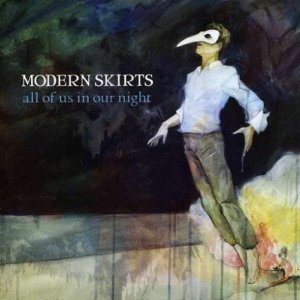
Open all of your windows, can’t you hear the boys are calling Step outside for the night, y’know it’s summertime, they’ll all be there And they’re playing memories on the radio Got your back pretty one, I know that you’ve got mine
Oh my love, there is trouble in the heartland You and me, as we walk the square of possibility Caught up in a love that could not be
I remember she used to refer to you as sweet, sweet prince Though she’s always known that you’re nothing but a working man’s son Your ambition was always to high for one of us Surely you would go on, oh baby, to do what we can’t dream
Oh my love, there is trouble in the heartland One last dance, save your worries for another rainy day You wouldn’t want it any other way But darling it’s time to say our goodbyes to summer romance By the fall, all will be gone and then we’ll walk our separate ways We’ll let this night be our last big mistake
From the heroes of yesteryear The only one, still left standing Tuned in to life’s radio A blue song from long ago
Oh my love, there is trouble in the heartland You and me, as we walk the square of possibility Caught up in a love that could not be
But darling can’t you see? We’re still soldiers of the heartland, even now I still see you like I did when I could dream of a place where we’d be known as king & queen
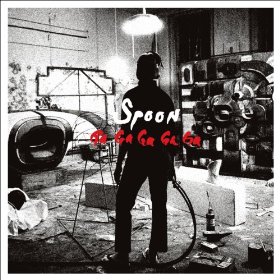
Texas indie poppers Spoon brightened and biggened up their sound for 2007’s Ga Ga Ga Ga Ga, a breakthrough album that cracked the US top ten. Cautionary anthem “The Underdog” lead the charge in terms of airplay.
The seemingly random key modulations here might be initially off-putting, but they’re just another hook after a listen or two. Certainly makes you wonder what was inside the mind of the writer at the time, though…
And for the whitest version ever of a James Brown song–or any other song–the award goes to…
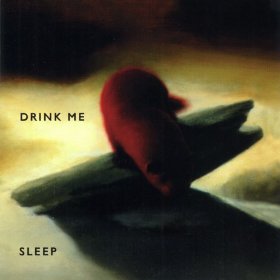
1990’s Brooklyn duo Drink Me created some of the most endearingly quirky and humorous folk music I’ve ever had the pleasure to come across. But a look beneath the layer of quirk always revealed a genius for a remarkably economical brand of song craftsmanship not seen perhaps since Roger Miller.
They covered other artists rarely, but in this case they picked the perfect song to demonstrate how strikingly un-mainstream an act they were. In a great way.
If Roger Daltrey’s hair-raising scream in “Won’t Get Fooled Again” is one of rock’s great moments, the pitiful yelp that falls at the end of this song is its perfect antithesis–an equally definitive moment. Of some sort.

 Every Moment Has A Song