"There's a time in life for Hoagy Carmichael. There's a time in life for Claude Debussy. There's a time in life for Jerry Lee Lewis. There's a time in life for Destiny's Child. All these things have their moment." ~Elvis Costello
I’m not usually big on nostalgia, but record stores?
Oh, baby.
My first was Walt’s Record Shop on South Salina in downtown Syracuse. I was in grammar school, and that was before malls, when people still went shopping downtown. Walt’s wasn’t even a great record store, but it had a better selection of LPs and 45s than Woolworths or Grants.
If you liked rock and roll, a record store was a gateway drug. Everything was there! You could hold albums and singles in your hands, look at the covers, read liner notes, smell the vinyl. Records were real, tactile objects, which you brought home, put on a record player, heard the pop and hiss of the needle as it hit the disc’s revolving grooves on the turntable and then—bam! loud rock music filled the room before your parents told you to turn it down…
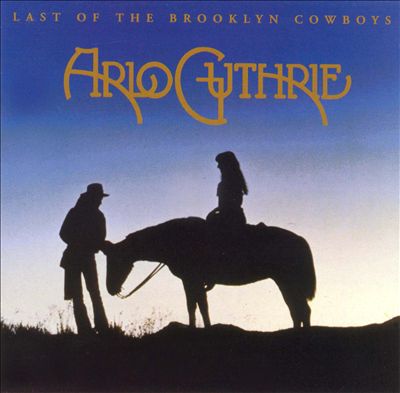
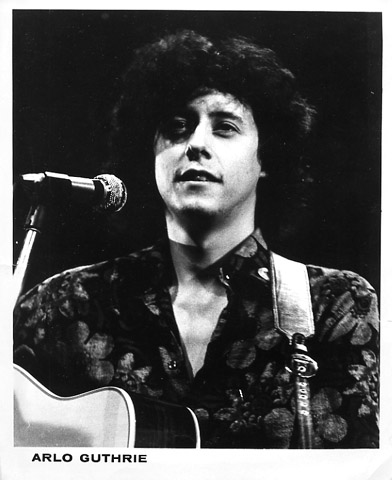
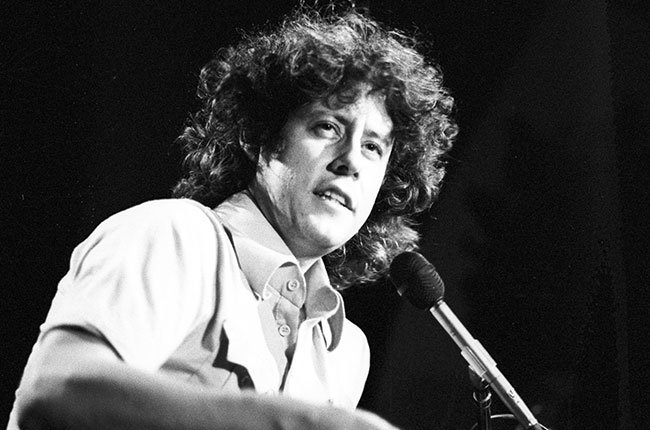
Arlo Guthrie’s follow-up to 1972’s Hobo’s Lullaby didn’t produce a hit single to follow his sole top 20 “City of New Orleans” but it’s as fine a collection of covers and originals as he ever released.
Fortunately his somewhat fluky 1972 hit didn’t convince Arlo to steer his career toward a more contemporary and chart-friendly style, or even the prevailing James Taylor singer-songwriter sound of the time. Woody Guthrie’s son was far too steeped in authentic folk, cowboy ballads and old time Country & Western music.
If the late 60’s/early 70’s British folk movement of Pentangle, Steeleye Span and Fairport Convention revived centuries-old folk songs and murder ballads and introduced them to another generation, Arlo’s work in this era did the same for American folk chestnuts of decades past.
But his great talent was to make these tunes his own. Just as Steve Goodman’s original version of “City of New Orleans” disappoints after hearing Arlo’s masterful cover, so Guthrie’s versions of songs previously recorded by Ernest Tubb (“This Troubled Mind of Mine”) and Hank Williams (“Lovesick Blues”) sound definitive–more so to my ears in fact than the original versions.
And speaking of originals, Arlo sprinkles in his own compositions here too (“Last Train”, “Uncle Jeff”) and they blend seamlessly with the standards to form the tapestry of one of the 70’s strongest folk albums.
Incidentally, do you think Arlo’s “Uncle Jeff” may have inspired a certain John Denver hit of two years later?
Lost Frequencies feat. Janieck Devy: “Reality” (2015)
Lost Frequencies is Belgian music producer and DJ Felix Safran De Laet, whose previous single, “Are You With Me” went to number one in seven countries in 2014.
“Reality” also topped the charts in his native country, as well as Austria and Germany, but like its predecessor looks to miss the U.S. charts entirely.



![c50a88d77e8028f07fcb421c3fa785c5[1]](https://edcyphers.com/wp-content/uploads/2015/10/c50a88d77e8028f07fcb421c3fa785c51.jpg)


![hitler_ruins_your_favorite_song_lyrics_640_01[1]](https://edcyphers.com/wp-content/uploads/2015/10/hitler_ruins_your_favorite_song_lyrics_640_011.jpg)


![William-steals-song-meme[1]](https://edcyphers.com/wp-content/uploads/2015/10/william-steals-song-meme1.jpg)