"There's a time in life for Hoagy Carmichael. There's a time in life for Claude Debussy. There's a time in life for Jerry Lee Lewis. There's a time in life for Destiny's Child. All these things have their moment." ~Elvis Costello
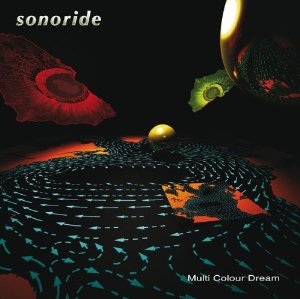
Stockholm, Sweden’s Sonoride have digested the sounds of ELO and the Beatles circa 1967 and what they’ve regurgitated in the form of the semi-psychedelic Multi Colour Dream mostly sounds like a synthesis of the two.
All except “A Little Green Park”, which is more of a straight-ahead pop song than most of the album, a celebration of the simple joys of a trip to a favorite park–a place where “the sun never seems to be off duty…and some soothing scent is always somehow present.”
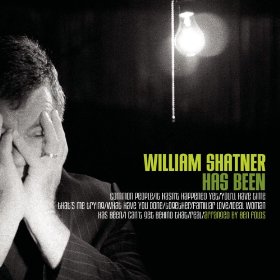
When I tell people what a great album William Shatner’s Has Been is I’m consistently misunderstood. I know I have a snarky sense of humor at times. I know I often tend to communicate by saying the opposite of what I actually mean. But as unlikely a scenario as you might find it to be, I’m dead serious when I tell you this is a very, very good pop album.
And no, I don’t “like it ironically”. Albeit elements of novelty abound, this record is not in the category of Shatner’s 1960’s cheese-fest The Transformed Man, which can only be appreciated in the ironic sense. Rather than spotlight Bill Shatner the untalented singer as that spectacularly bad album did, producer Ben Folds plays to Shatner’s strengths here–namely, his ability to deliver dramatic spoken lyric. It works.
When Folds signed on to produce and arrange this record (he and Shatner had worked together before, on Folds’ Fear of Pop project) he didn’t check his keen pop sensibilities at the door. The music here is top-notch, not to mention quite diverse.
And the guest performances are inspired. Listen for Joe Jackson’s impassioned take on the cover of Pulp’s “Common People”, the well-cast Henry Rollins on the duet/litany of general complaints “I Can’t Get Behind That”, or Brad Paisley taking a heartfelt turn on the chorus of “Real”. Folds himself takes vocals and piano on the tale of father/daughter estrangement “That’s Me Trying”. Folds’ plaintive melody and vocal delivery complement Shatner’s lamentation here perfectly.
Interlaced among all that is the astonishingly broadly-talented Mr. Shatner delivering what are at times shockingly honest and confessional-sounding self-penned lyrics. Most extreme example (not featured here) is “What Have You Done”, an unblinking account of Shatner’s discovery of his wife, dead in the couple’s swimming pool.
The guy has stones, or happens to be at the station in life when he just doesn’t give a shit anymore what people think. Probably both.
The album’s title track is possibly its highlight. Not only is it a brilliant musical lampoon of a now-obscure 60’s pop sub-genre typified by Lorne Greene’s “Ringo”, but it serves perfectly as a (hilarious) raised middle finger to Shat’s critics. Good for him.
Of course he’s Captain James T. Kirk to most. But the list of William Shatner’s accomplishments–best-selling author, successful horse breeder, Priceline commercial icon, Emmy-winning Denny Crane, and of course, a singer of sorts–is admirable. As he says in the album’s final track, “Real”:
And while there’s a part of me
In that guy you’ve seen up there on that screen
I am so much more
While I’m dead serious about how good an album this is, the chief reason to listen is that It’s good fun.
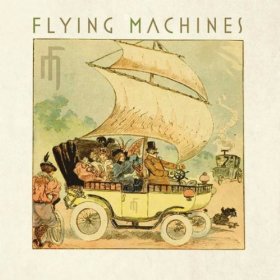
One might hear echoes of melodramatic symphonic pop of yesteryear in the sound of New York’s Flying Machines. I don’t throw out Freddie Mercury comparisons lightly, but there may be basis for it here.
“Stay” is from their consistently melodic and enjoyable debut.
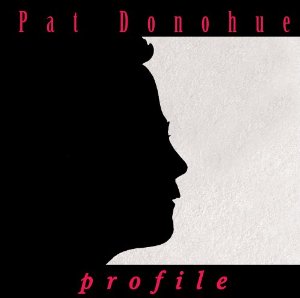
Pat Donohue is not only a master of acoustic fingerstyle guitar, but his songwriting is pretty spectacular too. The winning “Jazz Name” throws a witty series of internal rhyme rabbit punches at you until you surrender with a smile.
“Bohemian Rhapsody” by Queen is one of the most audacious pop songs ever made. Part ballad, part opera, part heavy metal orgasm, the song has six distinct sections and took over a month to record. At just under six minutes, “Bohemian Rhapsody” was considered too long for pop radio. “The record company, in their infinite ignorance, of course immediately suggested that we cut it down,” said Queen drummer Roger Taylor, who stood by his bandmates and refused to let the song be cut. “It really was hit or miss. It was either going to be massive or it was going to be nothing.”
“Bohemian Rhapsody,” of course, went on to become one of the most popular songs in music history. It spent nine weeks at number one in the UK following its release in the fall of 1975, and went back to number one after the death of singer Freddie Mercury in 1991. In America the song peaked at number nine in 1976 and re-entered the charts in 1992, when it was featured in the movie Wayne’s World. Last year, an ITV poll in Great Britain listed “Bohemian Rhapsody” as “The National’s Favorite Number One” song in 60 years of music.
In this fascinating video, Queen guitarist Brian May goes back to the mixing board to explain the complexity of layers that went into realizing Mercury’s vision for the song. The original 24-track analogue recording system was far too limited, so the band used the ping-pong technique to “bounce” literally hundreds of overdubs into the mix. May explains how the operatic vocal layers were inspired by the “cascading strings” effect made famous by Annunzio Paolo Mantovani, a technique May first tried out in 1974 with the guitar solo on “Killer Queen.”
The video is an excerpt from Inside the Rhapsody, a documentary that was included on the 2002 DVD Queen: Greatest Video Hits 1. For more on the making of “Bohemian Rhapsody,” please see our post, “Listen to Freddie Mercury’s Wonderous Piano and Vocal Tracks for ‘Bohemian Rhapsody’ (1975).” And for a reminder of how it all came together, here’s the official video: