"There's a time in life for Hoagy Carmichael. There's a time in life for Claude Debussy. There's a time in life for Jerry Lee Lewis. There's a time in life for Destiny's Child. All these things have their moment." ~Elvis Costello
From the Scottish band’s sixth LP, 2013’s Opposites, which was released in both single and double-album versions. There’s something to like about this band whether your taste leans toward nerd rock of Weezer, the blustery neo prog of Muse, or straight-up melodic pop rock (formerly more common in this country before folk, noise pop and chamber pop influences recently became predominant strains in indie pop).
“Opposite” is an atypically mellow moment for a band whose metal influences are commonly in evidence.
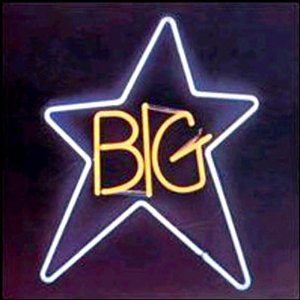
The problem with coming in late on an artwork lauded as “influential” is that you’ve probably encountered the work it influenced first, so its truly innovative qualities are lost. Thus, if you are hearing Big Star’s debut album for the first time decades after its release (as, inevitably, most people must), you may be reminded of Tom Petty & the Heartbreakers or R.E.M., who came after — that is, if you don’t think of the Byrds and the Beatles, circa 1965. What was remarkable about #1 Record in 1972 was that nobody except Big Star (and maybe Badfinger and the Raspberries) wanted to sound like this — simple, light pop with sweet harmonies and jangly guitars. Since then, dozens of bands have rediscovered those pleasures. But in a way, that’s an advantage because, whatever freshness is lost across the years, Big Star’s craft is only confirmed. These are sturdy songs, feelingly performed, and once you get beyond the style to the content, you’ll still be impressed.
(Reprinted from Allmusic Guide‘s review of Big Star’s #1 Record album)
I spent a few of my pre-teen years next-bedroom-door to an older brother who listened to everything from Dylan to Captain Beefheart. My love for Steely Dan took root in the days when “The Boston Rag” or “Rose Darling” or “Deacon Blues” crawled like a viper through the crack under his mostly-closed door.
And the Yes masterpiece “Close to the Edge” blew the top of my head off when it came up in the rotation of albums he’d stack on the spindle of the dining room stereo with speaker wires threaded through holes in the floor to the basement so our ping-pong tournaments would be accompanied by an uninterrupted flow of music.
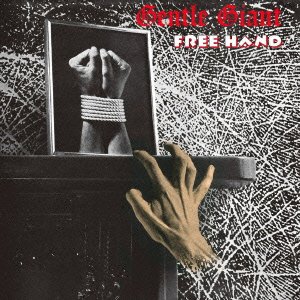
But when I first heard the break that comes at :57 of Gentle Giant’s “Free Hand”…I think that was the precise moment I realized there was a dimension beyond the “Dream Weaver”, way out past “Maggie’s Farm” and further on than “Over the Hills and Far Away”. When that weird little break came I was pretty sure I didn’t like it. But I found myself listening for it again. And soon I was pretty sure I did. (That’s how the best progressive rock works.)
Coming back to this record as an adult I realized I was not mistaken about that mind-expanding moment; Gentle Giant were a progressive band in the most literal sense of the word. Even now most of their catalogue is more of a challenge than I’m up to. But the Free Hand album at least (their highest-charting at #48) I find wholly approachable, if unnaturally originative.
Listen to the clip above for the definitive version of the title track–the version that came through the crack under my brother’s door and through my open door, blew my doors off and opened other doors down many other hallways since.
But do watch the clips below to appreciate the instrumental virtuosity of this band, which is impressive equally to their envelope-shredding musical creativity. Gentle Giant took compositional complexity to a level beyond even that of Yes.
The second clip is essential to a full appreciation of what this band could do. “On Reflection” (also from the Free Hand album, by the way) is the very next song in the same live set. And unbelievably, every band member begins the song playing a different instrument than on “Free Hand”, some while singing complex vocal countermelodies. They’ve also moved from a prog/jazz rock to something in an almost Medieval style, showing off uncannily complex layered vocal parts.
Many bands of the era were shortcutting it in live performance, trimming instruments or harmonies from sophisticated arrangements to make songs performable; Gentle Giant did anything but. It seemed to be a point of pride with them, not to mention a source of obvious joy, to nail it.
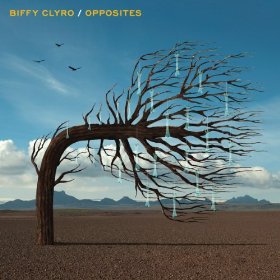 Biffy Clyro: “Opposite” (2013)