"There's a time in life for Hoagy Carmichael. There's a time in life for Claude Debussy. There's a time in life for Jerry Lee Lewis. There's a time in life for Destiny's Child. All these things have their moment." ~Elvis Costello
Full disclosure: I stole this one from a friend’s Facebook page.
I also know the answer (I don’t really know the answer). It’s The Dirty Projectors. No, wait! It’s Animal Collective. It’s definitely Animal Collective. Or actually, maybe it’s Radiohead. Or … Micachu.
Lord. I don’t know. I guess first we should define what it means to be original, especially in an age where it feels like there are no new ideas. (Ask any generation and we’ve been in this age since the beginning of time. When Loglog, a Neanderthal, started banging rocks together around 200,000 years ago, everyone said he “borrowed heavily” from Ahknok, a well-known Homo Erectus who was doing the same thing with sticks in the later Pleistocene epoch. Duh!)
When I listen to music, it’s usually easy for me to hear its roots. I can tell where it’s coming from. This is how we come up with phrases like “folk-flavored Brit psych-pop” or “punk-inspired drone-rock.” (I’m sorry about that, by the way). The vast majority of what we hear can be traced to an earlier sound which, in turn, can be traced to an earlier sound, and so on and so on. And, of course, that’s totally fine.
For me, the less I can make sense of the music’s roots, the more original it feels. I mentioned Dirty Projectors and Animal Collective, and the music of both of those bands often does leave me scratching my head as I attempt to link it to the past. Some of the stuff on Sufjan Stevens’ Age Of Adz challenged me to rethink what makes a song a song, especially the genius closing track “Impossible Soul.”
With that in mind, I think I’m going to have to go with Bjork. Bjork most consistently challenges just about all of my notions of music — where it comes from, how it’s made, what it means and, most importantly, my expectations of how it should be. Over the year’s she’s obliterated standard chord progressions, rhythms and melodies, severing ties to any clear, preexisting genres and reconnecting them in ways most of us have never imagined. Her most recent project, Biophilia, was so inventive it was hard to say what, exactly, it was. It was music, sure. But it was also a series of apps with strangely alluring, interactive graphics that allowed you to travel through the songs visually and even dismantle the music to make your own versions of each “track.” The beats, lyrics, everything about the sounds felt like it came from another planet. It’s easy to dismiss Bjork as just being “weird,” and a lot of people do. But really, I think she’s a genius who’s thinking and operating on a completely different level.
But Bjork is far from the only musician doing these sorts of things. Tell us who you think is making the most original music now, in the comments section.
Bob Marley’s former The Wailers bandmate Bunny Wailer has reportedly taken aim at rapper Snoop Dogg for posing as a member of the Rastafari movement after immersing himself in Jamaican culture last year.
The hip-hop superstar previously revealed he had been anointed Snoop Lion by a Rastafarian priest after experiencing a spiritual awakening while recording his first reggae project, “Reincarnated.” He adopted the traditional dress and dreadlocked hair during his time in Jamaica and filmed his transformation for a documentary, also titled “Reincarnated.”
But Wailer is not convinced by Snoop’s new lifestyle and he has accused the rapper of the “outright fraudulent use of (the) Rastafari community’s personalities and symbolism,” according to TMZ.
Members of the Rastafari Millennium Council have also launched a verbal attack on Snoop, demanding he refrain from using the moniker Snoop Lion and apologize for his behavior or face legal action, according to TMZ. They have also fired off a seven-page letter to the marijuana-loving star, insisting that “smoking weed and loving Bob Marley and reggae music is not what defines the Rastafari Indigenous Culture.”
Rob Dickinson’s solo debut displays the ex-Catherine Wheel guitarist/frontman’s penchant for the epic, soaring ballad–a perfect setting for his conversation with the Goddess of Love herself. His music packs an emotional wallop without overwrought histrionics.
And speaking of histrionics, Dickinson is the cousin of Iron Maiden’s Bruce Dickinson.
Jens had me here from the first two lines of the lyric:
Jennifer called, told me ’bout her latest admirer
Said, “Someone should make a pamphlet called ‘So You Think You’re in Love with Jennifer'”
Add the sly slip-note piano lines and I’ve fallen for another sweetly skewed Jens Lekman song, despite not really knowing what he’s on about with the cherry-sucking bats in the last verse.
Every era and genre of music has songs that were popular in their day, but whose footprints have been washed from the sand over time. Our goal in this series of posts is to resurrect their memory; to help in a small way to reverse the process of the “top tenning” of oldies formats, which reduce hit makers from previous decades to their most popular song or two and then overplay them until you almost loathe an artist you used to enjoy (think “Sweet Caroline” or “Don’t Stop Believin’”).
I’ll be citing the Billboard pop charts for reference. Billboard Hot 100 charts of the 60′s and 70′s were a much more accurate reflection of a song’s popularity, before there were so many other ways for a song to enter the public consciousness (reflected by the number of pop charts Billboard now uses). It was an era when radio ruled–before a car commercial, social music sharing site, or Glee were equally likely ways for a song to break through.
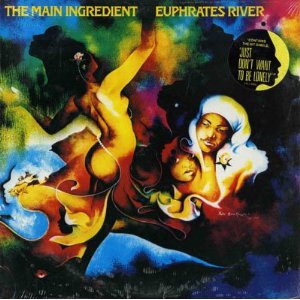
The Main Ingredient: “Just Don’t Want to be Lonely”
#10 in 1974
The Main Ingredient found the recipe for top ten success only twice over the course of their career. Their first hit was the #3 “Everybody Plays the Fool”, which has lived on via oldies radio and cover versions (most notably Aaron Neville’s top ten in 1991). “Just Don’t Want to be Lonely” is from the same mold: a few bars of spoken-word from lead vocalist Cuba Gooding Sr. (father of the actor) lead into a smooth R&B ballad with a surprising degree of complexity in the arrangement. The Main Ingredient’s best work was on par with that of the Spinners. The main ingredient they lacked was the ability to cook up hits on a consistent basis.
_________________________
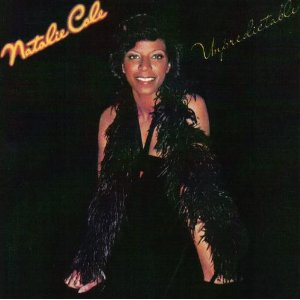
Natalie Cole: “I’ve Got Love on My Mind”
#5 in 1977
To be honest, I have little or no recollection of this song from radio airplay in 1977. It seems most of us have gaps in the memory even from years when we know the music well. And somehow this song climbed to #5 and spent 21 weeks on the pop charts and yet made no lasting impression in my brain. I may have been preoccupied by having just discovered Elvis Costello…
_________________________
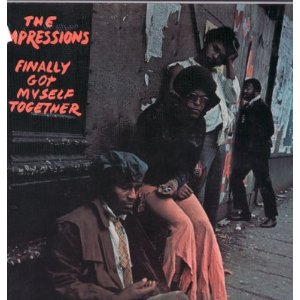
The Impressions: “Finally Got Myself Together (I’m a Changed Man)”
#17 in 1974
The Impressions put an amazing 39 songs into the Hot 100 over a chart career that spanned from 1958 to 1975, but only reached the top ten twice (“It’s Alright” in 1963 and “Amen” in ’65).
Although they continued to record albums until 1981, this final top 20 hit found them nearing the end of their hit years, and two lead vocalists removed from the legendary Curtis Mayfield, who’d gone on to solo success.
_________________________
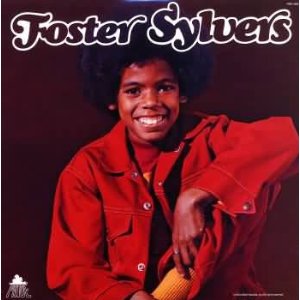
Foster Sylvers: “Misdemeanor”
#22 in 1973
I think the AllMusic Guide goes just a little bit overboard in their appraisal of this song:
Dismiss Foster Sylvers as little more than a poor man’s Michael Jackson if you must, but damn, the smash “Misdemeanor” lays to waste everything MJ recorded solo until “Don’t Stop Til You Get Enough.” A sinuous, loping evocation of street-smart puppy love, it’s one of the most underrated funk jams ever.
But it is a cute little piece of bubblegum soul–nothing more, nothing less.
Foster also sang with his 9-sibling family group The Sylvers, who hit top ten with the disco hits “Boogie Fever” and “Hot Line”.
_________________________
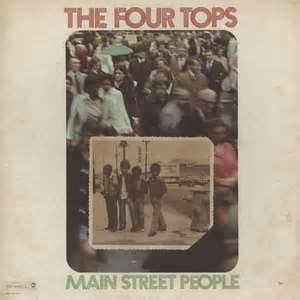
The Four Tops: “Are You Man Enough”
#15 in 1973
From the movie Shaft in Africa, this one splits the difference between The O’Jays’ “Backstabbers” and “What’s Going On”-era Marvin. But it certainly hasn’t earned a lasting spot on radio alongside songs from the era with sunnier messages, such as the Four Tops’ own “Ain’t No Woman (Like the One I’ve Got)”.
_________________________
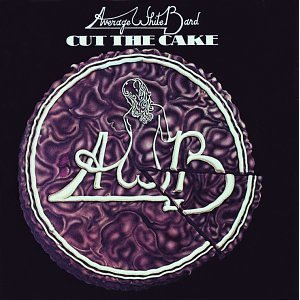
Average White Band: “If I Ever Lose This Heaven”
#39 in 1975
If you’re not native to the land of 70’s soul, you’ve probably grafted some Al Green, Marvin Gaye, Stevie Wonder and Earth, Wind & Fire onto your iPod playlist for a little hip cred, as they say. I’m here to tell you not to forget AWB. Despite hailing from Scotland they defined the sound of 70’s funk/soul as much as anyone in the era. Their first two records in particular are amazing, including this rather forgotten gem from their second album Cut the Cake.
_________________________
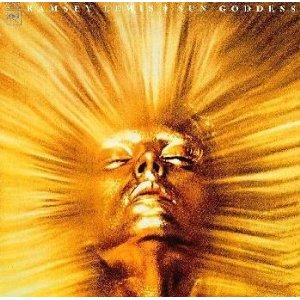
Ramsey Lewis & Earth, Wind & Fire: “Sun Goddess”
#44 in 1975
When the Ramsey Lewis Trio spun off members Eldee Young and Red Holt as Young-Holt Unlimited, the pianist replaced them with a new rhythm section which included Maurice White on drums. White, of course, also subsequently resigned to form Earth, Wind & Fire. A couple years later, after Lewis moved to Columbia Records–the same label as EWF–White produced Lewis’ 1974 Sun Goddess LP with members of Earth, Wind & Fire playing on the sessions.
The album’s jazz fusion sound and use of electronic keyboards represented a departure from Lewis’ previous work, and the title track was a big jazz crossover hit. In fact, another single featuring EWF, “Hot Dawgit”, reached #50 on the pop charts as well. Maurice White is listed as co-writer of both songs. Ramsey Lewis isn’t credited with writing either. This, as well as the fact that “Sun Goddess” was recorded for the same label as Earth, Wind & Fire and featured the band, leads me to believe this song could have been included on an Earth, Wind & Fire greatest hits compilation, but it never has; they’ve only released a live version under their name.
In other words, this song is sort of Earth, Wind & Fire’s “lost hit”, having only appeared on a Ramsey Lewis album, despite arguably sounding more like Earth, Wind & Fire than Lewis.
 (Reprinted from MSN)