Recommended Albums #90

Corinne Bailey Rae: Corinne Bailey Rae (2006)

It’s not typical of this site to spotlight a four million copy-selling, number four-charting record.

And yet British singer-songwriter Corinne Bailey Rae’s debut album seems in large part to have flown below the mainstream radar, particularly in the US.

So this is for all the Sade, Norah Jones, Erykah Badu, Macy Gray, Zero 7, Brand New Heavies or even Bill Withers or Al Green fans who missed the boat in, or since, 2006, and for all those for whom “Put Your Records On” was their only exposure to the smooth, stirring soul Rae created.

“Created” is past tense because she arguably never quite duplicated the rich, warm jazzy soul stew she served up on her debut album.

“Like a Star” is surprisingly laid back and spare for an opening track (much less for a first single, which it was).

But the focus is on Rae’s voice here, and the austere arrangement is perfect for washing your ears clean of background clutter–the better to appreciate what follows.

“Trouble Sleeping” has the perfect background /dinner music vibe. Perfect addition to a studying music mix.

“Call Me When You Get This” half-steps up the energy. Think cocktail hour at a really nice party.

And mother-daughter love song “Butterfly” perhaps best shows Rae’s songwriting chops.

Corinne Bailey Rae is everything the critics said Norah Jones’ Come Away with Me was. No, it didn’t earn the armload of Grammys. But the singing was just as engaging and the songwriting a bit better.

Listen to: “Like a Star”

Listen to: “Trouble Sleeping”

Listen to: “Call Me When You Get This”

Listen to: “Breathless”

Listen to: “Butterfly”

In my mother’s house
There’s a photograph
Of a day gone past
Always makes me laugh
There’s a little girl
Wary of the world
She got much to learn
Get her fingers burnt
An affinity
Between you and me
Was a family
Said that I’d be fine
Gave me all your time
And I left your side
Like a butterfly

Shower me with your love
Colour of everyday
You make the milk-gold Sun
Shine on me, yeah
Lift me up so high
Watch me fly away
And you give me life
Like a butterfly

In my mother’s house
There was happiness
I wrapped my myself in it
Was my chrysalis
As my life unfolds
See a pattern through
Of you protecting me
And I protecting you
What was that you’d say?
“Make your own mistakes
And when you’re grown
Make sure that you remain the same”
Now I realise
What was on your mind
When I left your side
Like a butterfly

Shower me with your love
Colour everyday
You make the milk-gold Sun
Shine on me, yeah
Lift me up so high
Watch me fly away
And you give me life
Like a butterfly

Recommended Albums #89

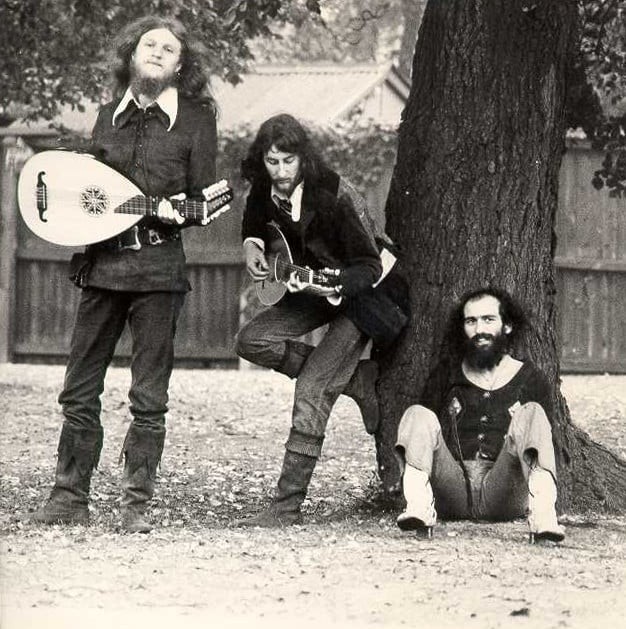
Hunter Muskett: Every Time You Move (1970)

I should say English folk trio Hunter Muskett come recommended to fans of Tir Na Nog, Fairfield Parlour, Heron and Duncan Browne–but it’s 2024 and I know it’s unlikely more than a few who read this have heard of any of the aforementioned five-decades-old acts.

So I write for the few who are hip to the wistful, sad and beautiful sounds these artists produced in the heyday of the British folk revival of the late 60’s and early 70’s, and for the few musically adventurous souls who would seek out something rare, precious, old…and yet new to their ears.

Terry Hiscock, Chris George and Doug Morter formed Hunter Muskett in south London and played folk clubs and colleges in that city until being discovered and signed to the Decca Nova record label, resulting in this 1970 debut album.

Since Decca Nova lasted less than a year, it was the band’s only release for the label.

Given the ephemeral nature of folk acts of the time, you’d think the story would likely end soon after.

But amazingly the band endures to this day, with recent album releases and a full slate of folk club tour dates around England through November of 2024 and presumably beyond.

And their music? I hope you’ll listen, because any description attempted here will probably fall short.

It’s quiet, contemplative, and evocative of an England that mostly no longer exists. And really the perfect antidote to our mad, unquiet 21st century existence.

To be topical for a moment, I write this one day after an assassination attempt on an American presidential candidate. Like 9/11 and Kennedy in ’63, a measure of innocence seems lost and today the world feels less safe than it did yesterday.

It’s perfectly sane to feel the need to retreat to a quiet place of the soul in times like these. I think music–particularly of this type–is a healthy antitoxin and countermeasure. It’s safe. It’s affordable. And it’s without side effects.

On a personal note, Hunter Muskett brings my oldest brother Jim to mind, who I lost about 20 years ago. I don’t know if he knew the band, but they were right in the wheelhouse of his musical taste, and I know he and I would have had an enthusiastic conversation about them.

You’ll know literally 30 seconds into the title song if this is for you. The gentle melancholy of acoustic guitar, acoustic bass and poetic lyrics sung in hushed harmony are arresting.

And by the time gently sympathetic strings insinuate themselves you just might be transported to a more pleasant, more obsolescent–more English destination…

I have a fire, I have my chair/I have an old man’s dream of other years/My silver watch was made a grandfather ago/My wife still laughs when I tell her I’m too old to make her smile

I have tobacco, I have my pipe/And at the Rambler’s Rest I share a pint/I have a photograph of me when still a boy/I have a medal and a book I once enjoyed some years ago

I have a path where I can walk..

Listen to: “Every Time You Move”

Listen to: “Storm On the Shore”

Listen to: “I Have a House”

Listen to: Davy Lowston

Listen to: “Snow”

Recommended Albums #88

Zebra: 3.V (1986)

Zebra was (and as of this writing still is) an overlooked melodic hard rock band whose eponymous 1983 debut was the fastest-selling album in the history of Atlantic Records thanks to buzz generated by relentless east coast gigging.

That debut is a fine album. Its follow-up, for which guitarist/singer/songwriter Randy Jackson admits he had little material prepared due to the band’s tour and promotion schedule, is lackluster by comparison.

With the third album (whose title is a reference to the lengthy process of its creation) came a commitment to make the best record of the band’s career, as they perhaps sensed their major-label mortality.

Predictably, it was the last of their Atlantic tenure, as the label did little to promote it and it failed to chart.

But critics have given 3.V high marks, saying it contains some of the trio’s best material. The powerful, infectious guitar and synth sound and Jackson’s songwriting deserved a better commercial fate.

I saw the band live for the first time in 2023 and they were still bringing it. Randy Jackson’s guitar work was brilliant and his vocal range still impressive.

Listen to: “He’s Making You the Fool”

Listen to: “Hard Living Without You”

Listen to: “Isn’t That the Way”

See also: https://edcyphers.com/2023/08/27/video-of-the-week-zebra-dont-walk-away-live-1983/

Recommended Albums #87

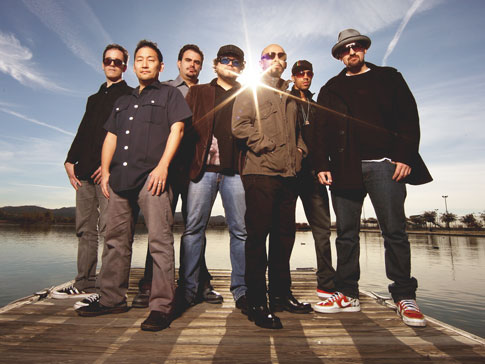
Brave Combo: A Night On Earth (1990)

I grew up, more or less, on classic rock and bubblegum pop. Then Brave Combo saved me.

There’s nothing wrong with classic rock, as I’m sure you’d agree. And there’s nothing wrong with saccharin pop either, as I’m less sure you’d agree.

But there’s a risk, as you reach a certain age, in succumbing to taste lock, which I’d define as a loss of elasticity of musical appreciation.

Like older bodies often don’t stretch unless there’s a concerted effort to make them stretch, our music appreciation can be, uh, hamstrung by an unwillingness to broaden our palette beyond what we’ve always liked.

Although I came to love many types of pop and rock from a young age–from hard rock to progressive to folk to British Invasion to 70’s singer-songwriters to recently-labeled “yacht rock”, it was all pretty much guitar-based music.

Then a CD handed down from my older brother changed all that.

Brave Combo’s A Night On Earth opened my ears to music that was led by a clarinet…an accordion…a saxophone (and not the toothless, smarmy Kenny G kind).

The guitar in Brave Combo’s music–band leader Carl Finch’s guitar– was often just keeping the rhythm. The leads were given over to instruments less often associated with rock and pop.

And the songs were nothing short of a concise musical tour of the world.

In a sense, my appreciation for music is divided into pre-Brave Combo and post-Brave Combo eras, because ever since they smashed open my brain I am able to listen to almost anything without prejudice; without the instrumentation being an impediment. I’m open to all styles of music since coming to love this band, since hearing this album in particular.

A Night On Earth was the equivalent in musical terms to the moment Dorothy opens her front door to see full-color Oz replacing bleak, black-and-white Kansas.

Mind you I hadn’t grown up under a rock. I’d been exposed to classical music. And jazz. But I appreciated them as something other than “my” music.

Brave Combo was a rock band. In fact, they almost seemed a punk band. I mean, I’ve never heard a polka as subversive as “Do Something Different”.

Yes, I said “polka”.

If that frightens you then I should warn you this album contains hora, tango, traditional Italian music, Afro-Cuban salsa, Brazilian choro, and Tex-Mex.

It’s all over the place. But it’s not “World Music” in the Peter Gabriel sense.

Although World Music maven David Byrne hired Brave Combo to entertain at his wedding, these guys don’t treat non-Western musical styles with reverence

They attack them with a vengeance.

There is no purism or musical snootery here. It’s just party music played with daring and consummate skill in styles representing the world over.

It might not take on first listen. I confess that the CD I received from my older brother ended up in the hands of my younger brother–until I visited him in New York a couple years later and he happened to put it on and all that clarinet-led goodness finally sunk in with me.

I asked for it back.

Then I never missed a Brave Combo album release or concert opportunity for the next two decades.

Since the departure of Bubba Hernandez the band has become more of a polkacentric affair. But this classic lineup, with Bubba playing bass, singing the Spanish-language tunes and keeping the Latin sounds to the fore, offered the greatest musical diversity.

This is the band that saved me from taste lock.

Listen to: “A Night On Earth”

Listen to: “Don’t Ever Dance With Maria”

Listen to: “Do Something Different”

Listen to: “Dulcecita”

Listen to: “Laura”

Listen to: “Linda Guerita”

Listen to: “Saxophone, Why Do You Weep?”

See also: https://edcyphers.com/2012/12/07/recommended-albums-32/

See also: https://edcyphers.com/2015/03/08/songs-you-may-have-missed-525-2/

Recommended Albums #86

The Left Banke: Strangers On a Train (1978/1986)

Sometimes the spell of enchantment cast by a band’s music belies the tumult of the creative process.

The Left Banke, led by 17-year-old songwriter/pianist/whiz kid Michael Brown and his father, producer/arranger Harry Lookofsky, pioneered so-called baroque pop with a pair of gorgeous mid-60’s hits–“Walk Away Renee” and “Pretty Ballerina”–inlaid with the sounds of harpsichord, woodwinds, and a small string section.

The music was as innovative as it was sublime.

But the band’s short lifespan is testament to the fact that all was not harmonious in the studio.

Brown left during the recording of their second album, frustrated by the challenges of reproducing their complex sound live with young and inexperienced bandmates.

And his bandmates were frustrated with Brown, who wasn’t the easiest guy to get along with.

But like other bands who produced enduring and seminal work, the Left Banke had an extended afterlife, including short-lived reunions, one-off singles and even commercial jingles.

Strangers On a Train (titled Voices Calling in Britain) was recorded sans Brown by the remaining trio of vocalist Steve Martin-Caro, drummer George Cameron and bassist Tim Finn. The recordings are from 1978, though the album didn’t see release until ten years later.

Finn had signed a publishing deal with Camex music and recruited his former bandmates to fill out his demos at the suggestion of the company, who encouraged him to turn it into a Left Banke project.

It’s notable that Finn never considered the recordings to be “finished” even when released in ’86 under the Left Banke name.

George Cameron, Steve Martin-Caro, Tom Finn

That said, Strangers On a Train is worth hearing for fans of Badfinger, Big Star and even the Raspberries.

“Hold On Tight” could be an Eric Carmen power pop rave-up from ’72.

“And One Day” is a delicate, heart-tugging ballad of lost love featuring Martin-Caro’s McCartney-esque delivery.

And “Only My Opinion” lands squarely in Badfinger/Big Star territory, with tasty guitar fills and plaintive vocals.

The 2022 re-release of the album includes 6 additional tracks–Michael Brown demos recorded with Steve Martin-Caro on vocals–offering a tantalizing glimpse at what might have been had the band reunited one last time.

A moot point since Steve Martin-Caro and Tom Finn died in 2020, following George Cameron’s passing in 2018 and Michael Brown’s in 2015.

But the 1978 recordings–despite Michael Brown’s absence and the fact that the band had moved on from its trademark 60’s baroque pop adornments–sounds like a lost piece of the 70’s pop rock story.

If you miss that sound and have worn out your too-small collection of Badfinger and Big Star records, here’s some new old music for you.

Listen to: “Hold On Tight”

Listen to: “And One Day”

Listen to: “Only My Opinion”

Recommended Albums #85

Lindisfarne: Nicely Out of Tune (1970)

While not exactly a household name this side of the Atlantic, Lindisfarne and their fine 1970 debut LP should be on the radar of any fan of folk-influenced rock of the era.

The Newcastle group’s sound evoked The Band at times, but with decidedly English leanings. Or a looser version of early Fairport perhaps. And nicely in tune with the acid folk vibe in late-60’s/early 70’s Britain.

This album peaked at #8 in the UK charts a year after its release, having gotten a jolt when their second album Fog On the Tyne topped the charts in 1971.

But while Tyne was their breakthrough, Nicely Out of Tune is their strongest album.

The pretty, atmospheric “Lady Eleanor” kicks off the album. The song features mandolin accents by Ray Jackson, who also played the instrument on Rod Stewart’s “Maggie May”. The songs ends nicely with a mandolin-and-bass coda.

The simple, haunting beauty of “Winter Song” repays careful attention to the lyrics, while “Turn a Deaf Ear” displays the band’s harmonies and shanty-esque pub singalong side.

“Alan in the River With Flowers” is another pensive ballad reminiscent of David Cousins’ early Strawbs writing. Its title parodies “Lucy in the Sky With Diamonds”.

And “Down” is a jaunty tune with instrumental credit to multi-instrumentalist Ray Jackson for playing “flatulette”, which actually consisted of blowing raspberries.

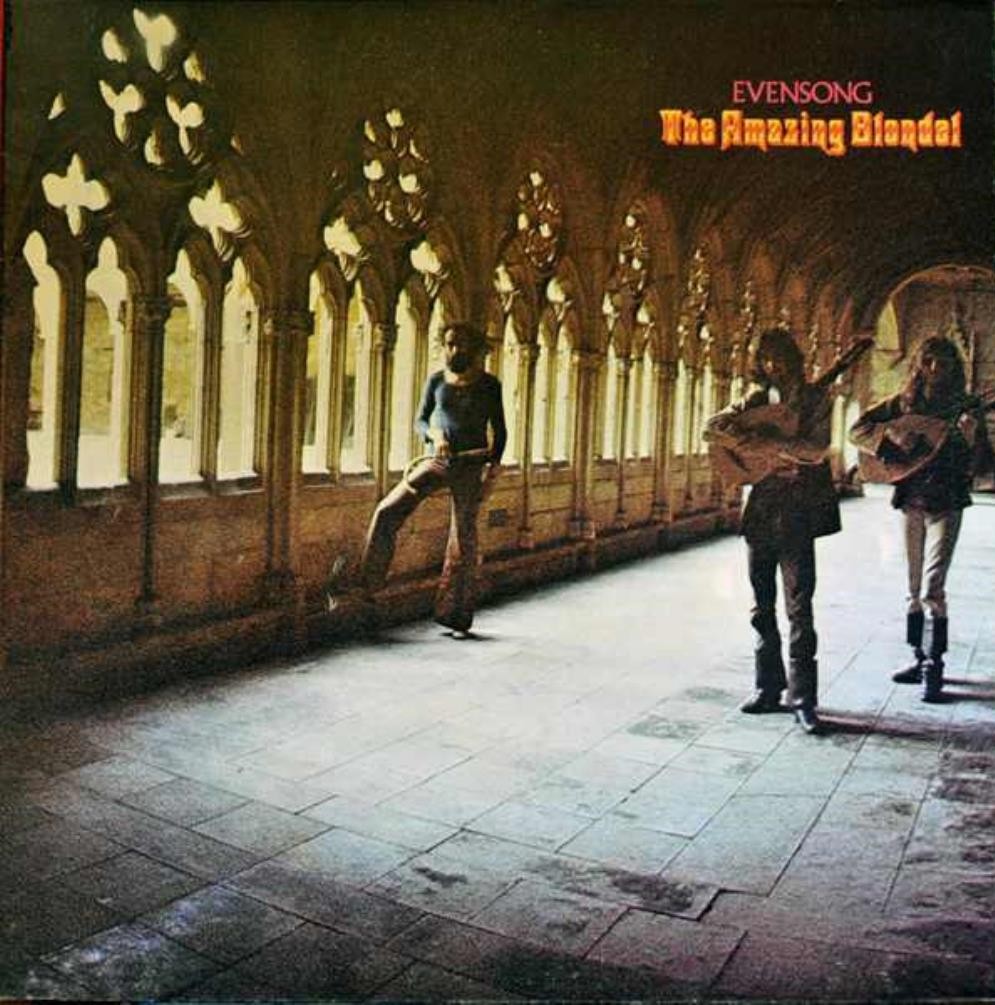
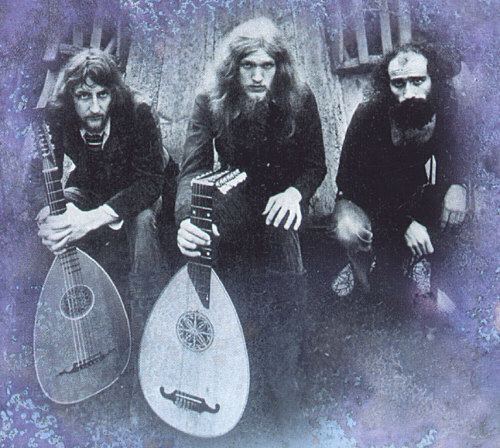
Like Camel, Amazing Blondel, Fairport Convention and so many other fine English bands of the era, lineup changes took a toll just a few albums into Lindisfarne’s run.

But while the subtle brilliance of Nicely Out of Tune will be lost on many, if you’re among those with an ear for nicely-rendered 70’s British folk rock, this album is–as they like to say across the pond–just the job.

Listen to: “Lady Eleanor”

Listen to “Winter Song”

Listen to “Turn a Deaf Ear”

Listen to “Alan in the River With Flowers”

Listen to “Down”

See also: https://edcyphers.com/2024/08/10/songs-you-may-have-missed-748/

See also: https://edcyphers.com/2022/03/12/video-of-the-week-lindisfarnes-geordie-genius-the-alan-hull-story/

Previous Older Entries Next Newer Entries