Theory of a Deadman use a blunt instrument to make a keen point about our unfortunate choice of pop culture heroes and our proclivity for “celebrating the idiot”.
I can’t tell you much about young singer Melanie (not to be confused with 70’s folk-pop singer-songwriter Melanie of “Brand New Key” fame). Her website is nearly devoid of details about herself or her recordings. She may or may not be from Italy. Her real name may or may not be Licia Fox. This recording may or may or may not be from 2015.
Regarding “Caruso”, fortunately, I can be more definitive.
Originally recorded by Italian singer-songwriter Lucio Dalla in 1986, the song’s subject is Italian opera tenor Enrico Caruso. Dalla’s version is certified platinum in Italy.
According to Wikipedia:
Controversially, the song simply tells about the pain and longings of a man who is about to die while he is looking into the eyes of a girl who was very dear to him.
This song is most probably a way of romanticizing Enrico Caruso’s last days in Sorrento and Naples. Enrico Caruso, a great legend of the Italian Opera was one of the greatest and most sought-after singers during the late 19th and early 20th century. He lived a very difficult and rather unhappy life having had many challenges and problems with Italian opera houses, but gained more fame and success in the United States.
He was born to a very poor family in Naples. He was often involved with women and had several love affairs with prominent married women in the performing arts. These love affairs often ended badly. With Ada Giachetti (his most passionate and longest love affair) who was already married, he had two sons, but in the end she left him for their chauffeur. Then he met and wed a woman 20 years his junior, Dorothy Park Benjamin, just a few years before he died, whom Lucio Dalla describes in this song “Caruso”. With her he had a daughter named Gloria.
Guardò negli occhi la ragazza quegli occhi verdi come il mare
Poi all’improvviso uscì una lacrima e lui credette di affogare
Te voglio bene assaje ma tanto tanto bene sai
It is said that people thought that Caruso was not really in love with Dorothy Benjamin. Later Caruso admitted that he married her: “Because I want somebody who is completely my own.” Sorrento is a coastal city not far from Naples. In the song it says “Surriento”, in the Neapolitan dialect meaning Sorrento. It’s where he spent many days in convalescence before he finally died at Vesuvio Hotel in Naples. The music and words of the refrain
Te voglio bene assaje
ma tanto tanto bene sai
è una catena ormai.
che scioglie il sangue dint’e vene sai…
are not original but are part of a Napolitan song, titled “Dicitencello vuje”, published in 1930 by Rodolfo Falvo (music) and Enzo Fusco (text) written according to the best tradition of Napolitan “romances” with a strong operatic style.
What is not clear is whether Caruso is talking to his daughter or to his wife while he sings, “Ti voglio bene assaje ma tanto bene sai”, in the song. In Italian one can say “Ti voglio bene” to any family member or close friend. The phrase is rarely used toward one’s romantic love. The exact words of the song are: “Te voglio bene assaje, ma tanto tanto bene sai” and are, in Neapolitan dialect, meaning: I love you very much. Very very much, you know.” Followed by the lines: “We’ve formed a (chain) bond by now, that thaws the blood in my veins, you know”. “Ragazza” is also used to reference a young lady, rather than one of Dorothy’s age or relation to Caruso; therefore, it is safe to assume that the song is addressed toward Gloria.
Lucio Dalla’s official video of the song was filmed at the Vesuvio Hotel where Enrico Caruso died.
English translation:
Here, where the sea shines and the wind howls, on the old terrace beside the gulf of Sorrento, a man embraces a girl he wept after, then clears his throat and continues the song:
I love you very much, very, very much, you know; it is a chain by now that melts the blood inside the veins, you know…
He saw the lights out on the sea, thought of the nights there in America, but they were only the fishermen’s lamps and the white wash astern. He felt the pain in the music and stood up from the piano, but when he saw the moon emerging from a cloud death also seemed sweeter to him. He looked the girl in the eyes, those eyes as green as the sea. Then suddenly a tear fell and he believed he was drowning.
I love you very much, very, very much, you know, it is a chain by now that melts the blood inside the vein you know…
The power of opera, where every drama is a hoax; with a little make-up and with mime you can become someone else. But two eyes that look at you, so close and real, make you forget the words, confuse your thoughts, So everything became small, also the nights there in America. You turn and see your life through the white wash astern.
But, yes, it is life that ends and he did not think so much about it on the contrary, he already felt happy and continued his song:
I love you very much, very, very much, you know, it is a chain by now that melts the blood inside the veins, you know…
I love you very much, very, very much, you know, it is a chain by now that melts the blood inside the veins, you know…
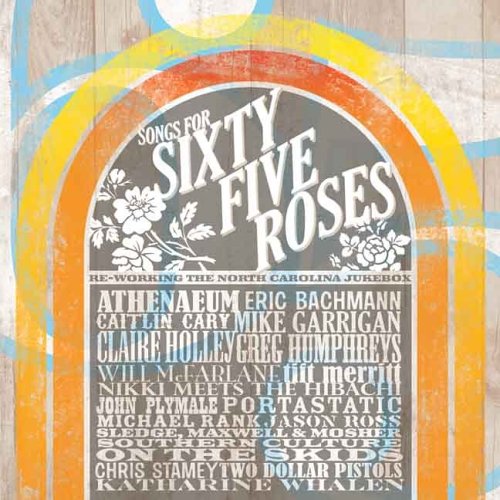
Don’t blink your ears or you’ll miss Nikki Meets the Hibachi’s take on a pretty tune by a band called Des Ark, whose Facebook page says:
“WE ARE POOR PPL WHO LIVE IN N CAROLINA WHICH MEANS WE PROBABLY CANT COME PLAY YOUR FEST IN TEXAS TOMORROW FOR $3 & A DUMPSTERED BURRITO BUT THX 4 THE OFFER”
…and listed under “Awards”, the following:
HONORS ENGLISH,MR MCCAULEY’S 9TH GRADE CLASS
OK AT SOCCER…
TEAM PLAYER
MINIMAL EFFORT, BORN TALENTED
Also they list Whitney Houston under “influences”. I’m skeptical.
King Bowser sings to Princess Toadstool of his wicked intentions. From a compilation album released by Nintendo in 1991, and previously a B-side for wacky, wonderful power poppers Jellyfish.
For a novelty record these guys sure put a lot of effort (and unconventional instruments) into the mix. Listen for the perky banjo that kicks in on the second chorus at 1:10, or the jew’s harp, or…
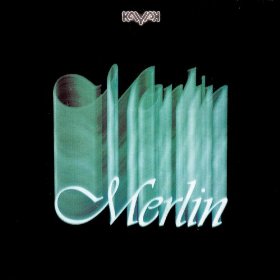
Dutch band Kayak’s career arc was similar to that of Genesis: early albums featured more ambitious symphonic progressive rock, and later work crossed over into more commercial mainstream territory. Depending which era you listen to, their work may call to mind bands such as Camel, Alan Parsons Project or Marillion.
The Merlin album from 1981 represents a middle period, and contains songs of the more Pop-gressive variety alongside a few more ambitious compositions.
“Niniane (Lady of the Lake)” spotlights the classical influence of conservatory-trained keyboardist Ton Scherpenzeel, who also shows a rather impressive command of English in his lyric writing here and elsewhere, considering it’s not his native tongue.




 Every Moment Has A Song